By Aaron Cordy
IVY Butler was a happy baby girl in 2016 when she was diagnosed with encephalitis; an inflammation of the brain and spinal cord that triggered epileptic seizures. For parents Liz and Scott, it was a trying time with many trips to the Royal Children’s Hospital (RCH) on the way.
The encephalitis caused inflammation of the brain, pressure and swelling down into Ivy’s spinal cord. The neurologists at RCH found that trauma to the brain caused a structural change to the brain in the form of scarring in the occipital lobe. When rafts of medication didn’t work, surgeons operated on her to remove scarring.
“When Ivy’s seizures go beyond 10 minutes, we have to follow her emergency plan. And if that doesn’t work, we have to present to our local emergency department for intravenous medications. At its peak, we were presenting there every six weeks, four weeks and weekly at one point. Everyone knew Ivy there,” said Liz.
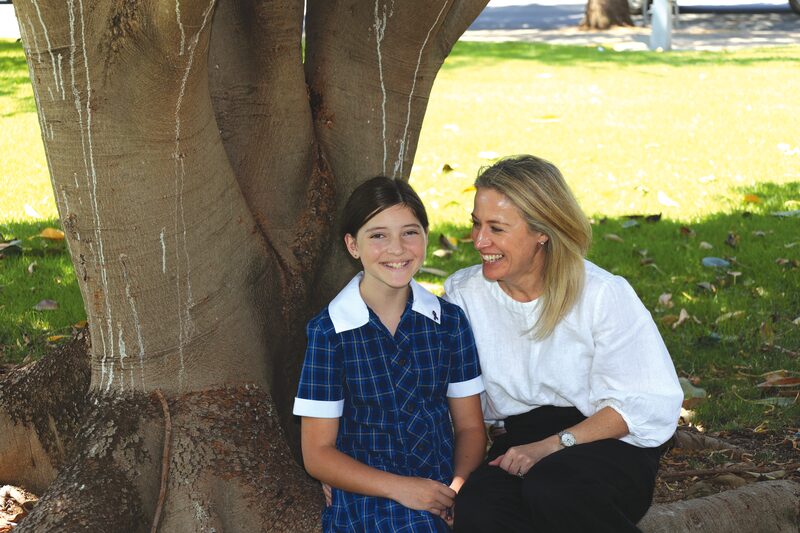
Now 11, Ivy’s seizures manifest themselves a little differently to what people commonly think seizures are. Ivy has vivid hallucinations that she has described as being like a 3D image cartoon. She has seen colours and shapes, penguins with an ice-cream stand, and recently a cow barbequing a cow.
“The first time Ivy told me, she’d woken up and said that she saw little people on her ceiling fan in her room jumping down in teams of colours. And that two men were fighting.
“I said, Ivy, that was a dream. She goes, ‘No, Mum, I saw something.’ She was just so adamant that she’d seen it. I recalled that her neurologist had said, from her previous EEG, Ivy’s seizures may involve her eyes.”
Despite the roller-coaster of surgery, medications, missed school, hospital visits and seizures epilepsy has given her, Ivy is still a shy, chatty normal girl with two older siblings, who likes basketball, riding her bike and anime, Demon Slayer being her favourite.
Little penguins are the cutest vision Ivy has seen. “It was like an animated penguin, blue on the outside and white on the stomach. They walked around with little ice cream stands, they were cute,” said Ivy.
“It’s done a doozy on her, dealing with epilepsy. But she’s an absolute champion with it. We often compare Ivy to a cat with nine lives. She’s used up three or four, still got a few to go,” said Liz.
While Ivy’s story is one of the more unique ones, Mum Liz can laugh and smile as she talks about her youngest child, for many families and carers of children with epilepsy it can be a daily struggle. Research shows 55 per cent of carers say they had accessed a mental health/family support service for the parents or siblings of children living with the condition.
That’s why this March; Australia’s epilepsy community is coming together to Make March Purple and raise awareness and funds to support the ‘Unsung Purple Heroes’ in epilepsy. All funds raised are donated to the development and delivery of vital epilepsy support services, education, training, and research. To find out more about Make March Purple, visit www.makemarchpurple.org.au.