By Natasha Fujimoto
As respectful crowds once again gathered last Friday to honour the legendary ANZACs, reflecting on the vastness of their collective legacy and sacrifice, it was also a time to remember the individuals whose personal experiences and tales of unfathomable courage and bravery allow us to more deeply grasp the true weight of what was given.
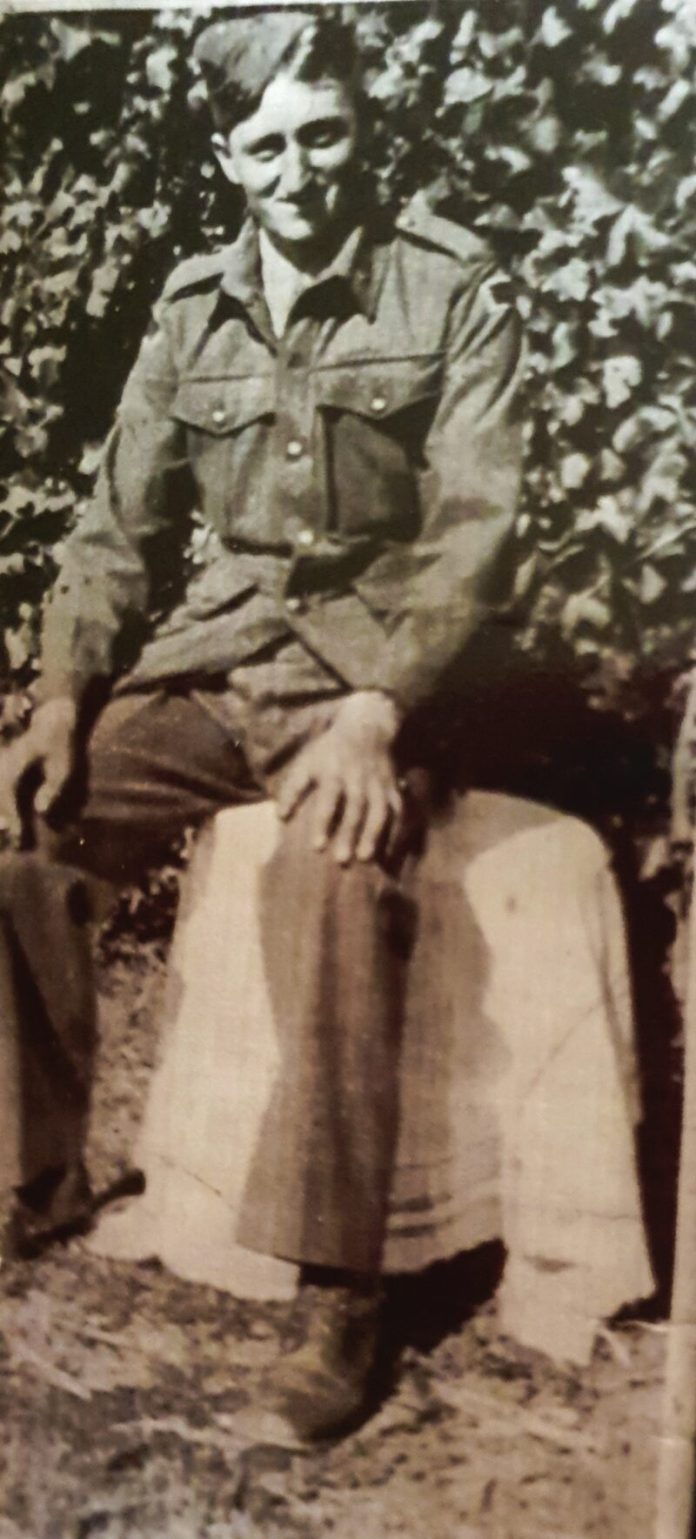
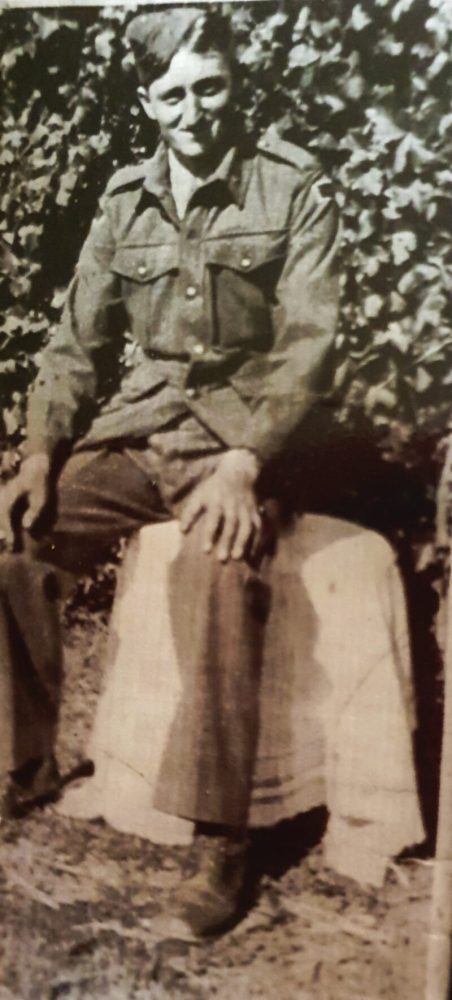
In keeping with the spirit of remembrance, and to pay homage to the vivid memory of his uncle, Sergeant Stanley Earl Watkins, known to all as Dick, Kyabram local Greg Watkins recently travelled to Papua New Guinea with his partner, Carli Lappin, to visit his uncle’s grave at Lae War Cemetery. Sgt Watkins was killed by a Japanese sniper in the jungles of Papua New Guinea in 1943.
The journey held great personal and familial significance for Greg, who had always intended to make the pilgrimage with his late father, Ron – Sgt Watkins’ younger brother by 13 years. It was not only a long-awaited tribute but also an opportunity to better understand the man behind the stories, stories Greg came to know through his uncle’s remarkably preserved war diary and letters sent home during his service.
“I’ve read some of the letters Dick wrote while posted in North Africa, and it’s amazing how you get a sense of someone from the pages of a letter,” Carli said.
“And it’s clear to me that Dick must have been a very good footballer, as all the Watkins boys were. The sense I got of him from his letters was that he was pretty laid-back. His letters were very relaxed, considering the circumstances he was in.”
By all accounts a soldier of courage and a leader who commanded respect, Dick’s story is one not easily forgotten.
Born in 1918, Dick was the third of twelve children to Ada and Lloyd Watkins, who farmed in the small Strathbogie communities of Tamleugh and Caniambo. Known for their stoicism, humour and hard work, the family sent the eldest four of eight sons to war – George, Lloyd Jr, Arthur and, of course, Dick. Norm, the eldest son, stayed to manage the farm, as was custom during the time. All the brothers were strapping lads who loved their cricket and football.
With the cataclysmic eruption of world war, Dick, at just 21 years of age, enlisted in November 1939 in the Second Australian Imperial Force (AIF). Joining the 2/7th Battalion, Dick was destined to fight in some of the most brutal campaigns of the war.
It was during his initial posting to North Africa that Dick wrote many of his letters home to his parents and younger siblings, including to his younger brother Ron (Greg’s father).
“In the letters, Dick wrote about everyday, ordinary things. He wrote about often playing footy and cricket between the battalions and about the various local country lads he ran into. Often in his letters, Dick would ask about the farm back home, wanting to know what was being planted.
“There was no sense of fear, trepidation or any mention of the war, perhaps this was censorship, or perhaps this was just true to Dick’s character,” Carli said.
From North Africa to the Battle of Crete in 1941, Dick, along with thousands of Allied soldiers, was left stranded, fleeing to the Cretan hills for safety after the invasion of German forces. Relying on locals for his survival, the young soldier spent eight months in hiding, and it was here that he wrote his war diary. When it was finally time for Dick to flee the island, he left his diary in the hands of a local who promised to send it on to Dick’s mother, Ada. Miraculously, Dick’s diary found its way home.
Returning to Australia in 1942, Dick married his wife, Rita Eileen, but his honeymoon was short-lived. Volunteering to re-enter the theatre of war (according to the criteria of the day, he was not required to do so), Dick was sent to Papua New Guinea, moving through the ranks by this time from Corporal to Sergeant. When asked why he wanted to return, he simply said, “How can I not?”
Leading his men with the same kind of courage replete throughout his story, Sgt Stanley ‘Dick’ Watkins was tragically killed in action by a Japanese sniper towards the end of August 1943 while bravely leading his men in a skirmish. Detailed in the book The Fiery Phoenix: The Story of the 2/7 Australian Battalion 1939–1946 by W.P. Bolger and J.G. Littlewood, Dick’s body was “…located by a patrol and acted as a covering force while Padre Pattie O’Keefe organised the burial detail,” on September 8, 1943. Dick was buried in the location where he fell, only later to be exhumed and reinterned at the Lae War Cemetery.
Greg’s (and Carli’s) journey to Papua New Guinea, coinciding with ANZAC Day, is of monumental significance not only to the memory of his brave uncle but to his father’s family, who, like so many, endured the indescribable loss of a loved one during war. With a resonance particularly poignant during national remembrance, Carli said:
“Visiting Lae is about paying homage, and it’s not just paying homage to Dick, that is the main thing, but for Greg, it’s about paying homage to his dad and his family.
“We’ve often talked about what it must have been like for Ron’s mum and dad, with stories of how Ada would be stricken with terror every time a postie walked up the road with a letter. So, the trip was also about paying homage to all of that history and wanting to keep it alive. It’s about honouring the past and recognising the sheer courage and the ability to withstand discomfort as they stoically, ‘just got on with it,'” Carli said.