

By Natasha Fujimoto
AMONG the most devastating psychiatric conditions, eating disorders are serious and complex mental illnesses that can affect almost every system in the human body, while steadily eroding a person’s mental, emotional and social wellbeing.
Despite their severity, eating disorders remain surrounded by stigma and misconception. This can be particularly damaging in rural and regional communities, where access to specialised services is already limited.
Far from being confined to young women, eating disorders affect people across genders and generations, against an increasingly complicated backdrop of social media, the manosphere, “looksmaxxing” culture and deeply entrenched expectations about how bodies “should look.”
Of course, those pressures are nothing new for women and certainly do not disappear with age, as changes associated with perimenopause, menopause and post-menopause can keep body image sharply in focus.
For people living with an eating disorder in regional Victoria, accessing critical services and support can mean travelling considerable distances for specialised treatment, adding another layer of complexity.
Calling for an $18.8 million investment over three years in the Victorian Government’s 2027-30 budget, Eating Disorders Victoria (EDV) is seeking to expand eating disorder services across the state, with rural and regional communities such as Greater Shepparton among those expected to benefit.
EDV chief executive officer Paul Bird said the organisation was seeking continued funding to maintain support services, including counselling and nursing, which are particularly important for people in regional and rural Victoria.
It also wants to expand its helpline hub, which currently operates during business hours despite demand for after-hours support.
Mr Bird said the pressures facing Victoria’s eating disorder system extended far beyond growing demand.
“Only three out of 10 Victorians with an eating disorder seek treatment, and when they do it takes them over five years on average,” he said.
Adding to the challenge for regional patients is the need to travel, often long distances, to access more specialised treatment.
“In regional areas patients usually have to travel to Melbourne for treatment, and that’s particularly hard because that also costs money,” Mr Bird said.
EDV also wants to establish a service for people experiencing long-standing eating disorders and increase its capacity to work with regional mental health organisations.
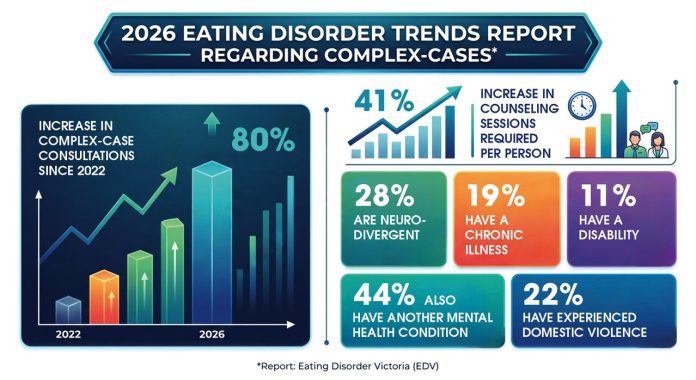
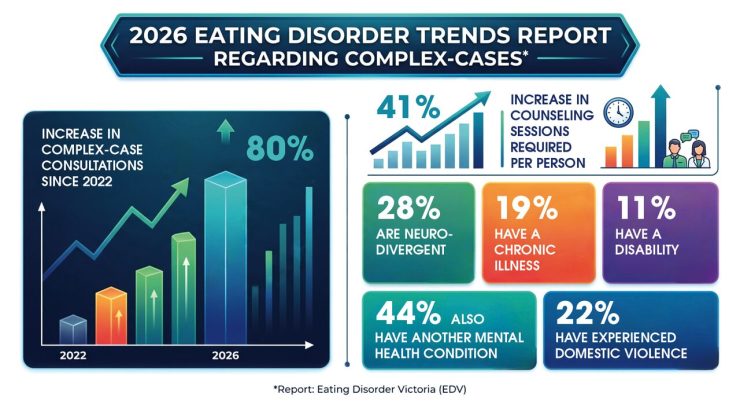
With eating disorders becoming increasingly complex, and contributing factors including trauma, anxiety, neurodiversity and cost-of-living pressures, Mr Bird said social media was a significant influence across different sections of the community.
“I think social media plays an insidious underlying pressure on people, but it affects different ages and different cohorts in different ways,” he said.