
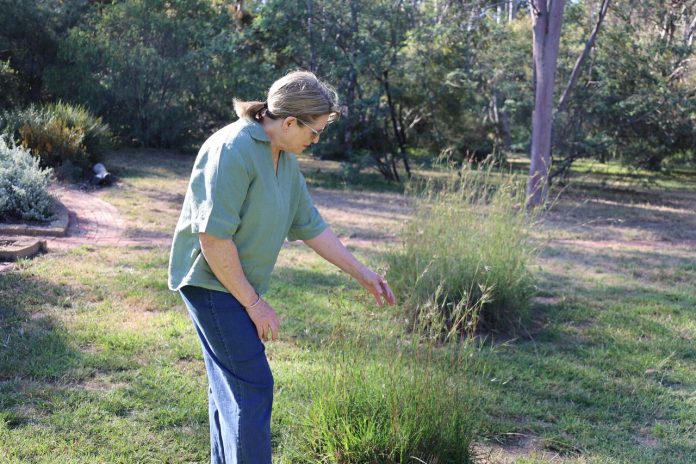
Wallaby Grass
Leave it unmown until after it has seeded so birds can feed on the seed. Important habitat plant for finches and other seed-eating birds. Native grass that naturally belongs in the area.
Kangaroo Grass
Valuable native grass that contributes to biodiversity and wildlife habitat. Wendy promotes retaining and planting indigenous grasses wherever possible.
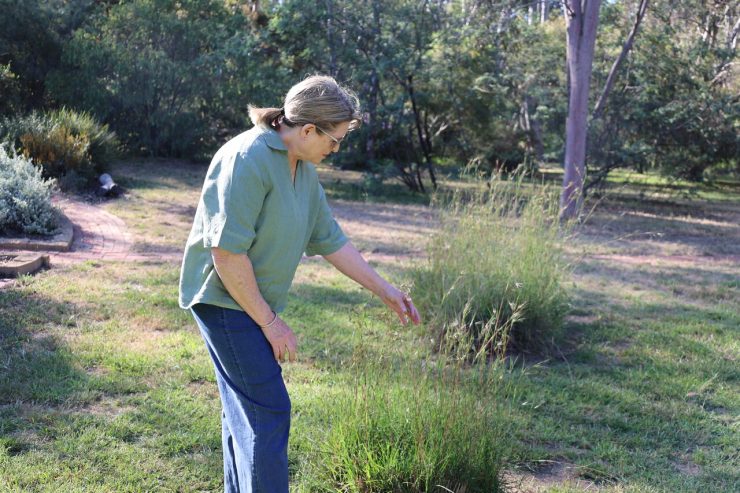
Photo: Natasha Fujimoto
Poa (Native Tussock Grass)
Produces seed eaten by red-browed finches and other small birds. Another reason Wendy encourages keeping native grasses rather than replacing them with lawns.
Saltbush
Indigenous plant worth conserving and spreading through the garden. Wendy retained existing saltbush and expanded its presence on the property. Plant dense, prickly species to protect small birds such as blue wrens and scrubwrens from predators.
Hop Bush (Dodonaea viscosa)
One of Wendy’s favourite local natives. Great for both small and large gardens. Its seed attracts king parrots and rosellas. Useful wildlife plant that does not grow excessively large.
Spreading Wattle
Plant dense, prickly species to protect small birds such as fairy wrens and scrubwrens from predators. Wendy said some of her most recent plantings were specifically chosen for this purpose.
Wendy’s broader gardening tips
- Plant indigenous and native species whenever possible.
- Include native grasses, not just shrubs and trees, because they provide food for birds.
- Create layered habitat with groundcovers, grasses, shrubs and trees.
- Use prickly plants to provide safe shelter for small birds.
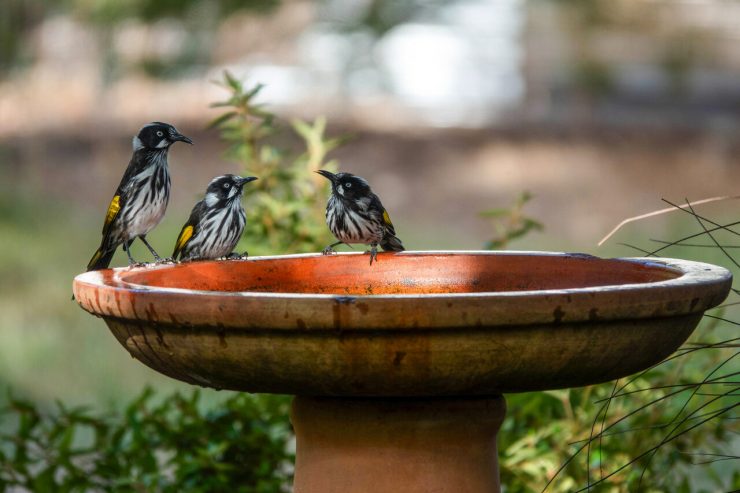
- Install bird baths, particularly important during hot weather.
- Leave seed-producing grasses standing until birds have had a chance to feed.
- Develop gardens for wildlife rather than appearance alone, focusing on habitat, food sources and shelter.
- Keep watering concentrated around the house, while using hardy native plants elsewhere to create a more self-sufficient landscape.
- Retain bushland and indigenous vegetation where possible rather than clearing and replanting.
- Place bird bath(s) in shaded area and keep clean and full. If your bird bath is deeper, and is glazed or slippery, place a rock in the center for birds and insects to alight safely.