
By Natasha Fujimoto
ON the day I was fortunate enough to drive up Wendy D’Amore’s driveway on her property in Kialla West, it was one of those glorious spring mornings, just cool enough for a breezy scuttle of wind, yet still warm enough to inspire an easy-going mood. Stepping from the car, however, brought an immediate, if unexpected, sense of calm.
Perhaps it was the rustle of leaves in tall river gums, the mingled fragrance of wattle blossom, grass and eucalyptus drifting on the breeze, or the melodic sing-song of a grey shrikethrush calling from the open garage. Whatever the reason, the stresses of the week seemed to simply slip away.
But of course, the serenity I was beginning to feel was no accident.
For Wendy, a conservationist and her husband Michael, their four-acre property is not simply a garden but a carefully crafted sanctuary where wildlife comes first, and where every plant, bird bath (there are six) and patch of native grass serves a purpose.
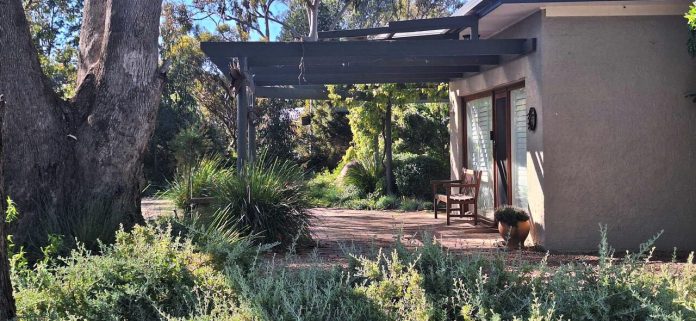
“When we bought this garden 18 years ago it was already established, and the last owners must have loved nature as well,” Wendy said.
“They loved the native environment and they’d planted mainly natives, not all natives, and they’d looked after it really well. We’ve lots of grasses here, which is fantastic, so we’ve tried to maintain those.”
Backing onto Seven Creeks, which gently runs through the rear of their acreage, the couple have deliberately left half of the property as bushland as water conservation and habitat preservation lie at the heart of the garden’s design.
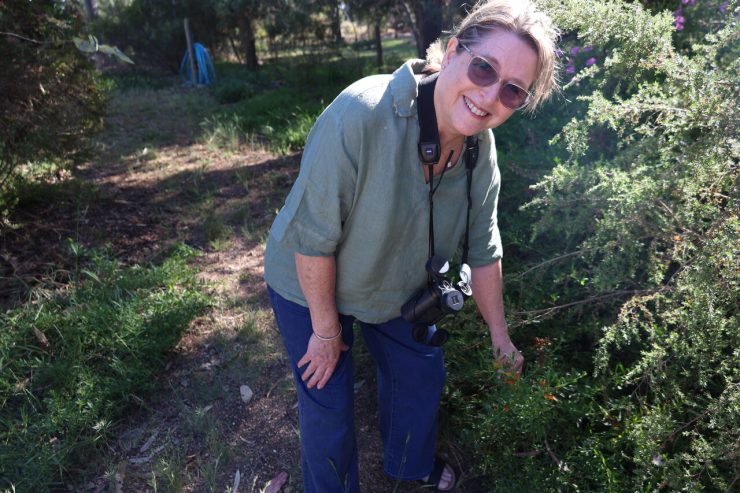
“Because we’ve got the creek behind us and within our property, we want to keep that part of the property bushland,” Wendy said.
“If I’m going to plant a non-native it will be around the house, and the rest should be fairly self-sufficient. Not always, like in 40-degree heat, everything benefits from getting watered. But generally, it’s all natives and it’s a garden for wildlife.”
Wendy’s deep commitment to wildlife has seen the couple steadily add to what was already established, selecting plants not only for their beauty, but also for the habitat they provide.
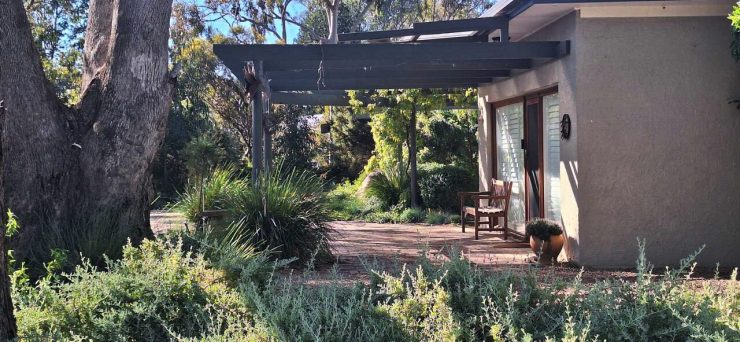
“Since moving here, we have just planted more natives, indigenous and native, so ones that belong here, and also a mixture of other natives because I can’t help myself,” Wendy laughed.
“I just love all native plants. We’ve planted particularly around the boundaries as well to block noise from the road and for privacy, but also to encourage birds. The latest plants we’ve planted are a lot of prickly plants, and that’s really for fairy wrens and scrubwrens to keep them protected.”
Indeed, the native plantings, together with the bushland setting, seem to be attracting quite the menagerie of local fauna, with possums, squirrel gliders, skinks, geckos, lizards, native bees and countless insects all sharing the property, while birdlife thrives among the trees, shrubs and grasses.
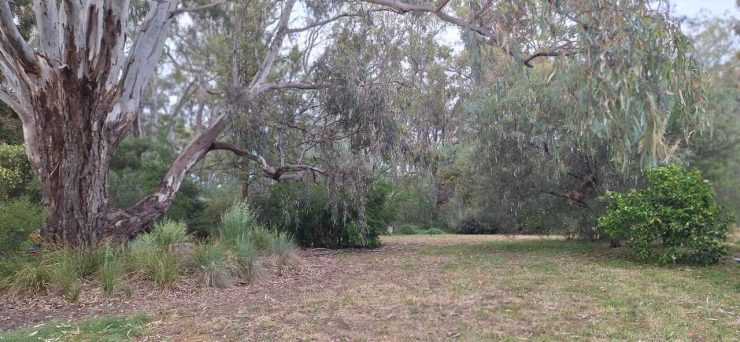
Recently undertaking a bird count on their property, Wendy and Michael recorded 16 different species in just 20 minutes while walking around their garden.
Native grasses such as wallaby grass, kangaroo grass and poa provide valuable seed sources for finches and other seed-eating birds, while flowering natives including correas, bottlebrushes, wattles, hop bushes and eremophilas provide nectar and shelter throughout the seasons.
Yet for Wendy, while working in the garden is a source of enormous pleasure, it is being able to live among such a profusion of colour and life that is the greatest reward.
“We love nature, and it’s wonderful to live in it,” she said.
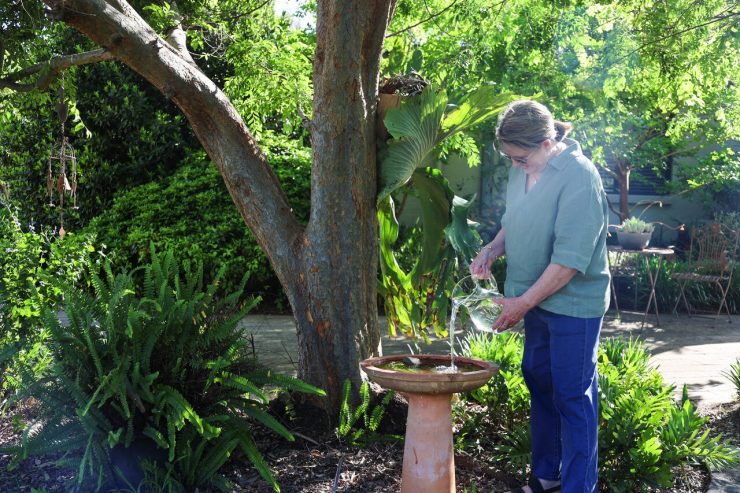
“We can just birdwatch from within the house because there are birds surrounding the house. We can sit at the back of the house with or without binoculars and just birdwatch, and we’ve deliberately set a lot of bird baths around the house. I’ve got six bird baths, and the majority I can see from somewhere in the house.
“It just gives us so much pleasure watching birds and sharing our lives with them, their lives and our lives. We love it. We love being surrounded by nature.”
While there is joy at the heart of Wendy’s garden, there is also conservation. While an irrigation system supplies areas closest to the house, channel water is used where watering is needed during periods of extreme heat.
And while the multitude of bird baths scattered charmingly around the property attract birds and insects, they are also an important source of water for wildlife.
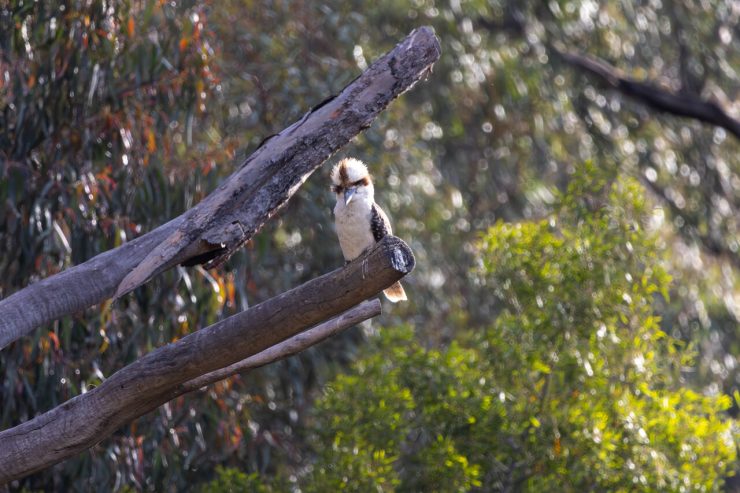
“I really want to get across to people to put bird baths in their garden. When we get these weeks of high 30s, they are so reliant on additional water.”
“It should be where they can see it from the house because you can relax inside the house, and I can just see little wrens in that bird bath there, and it brings so much pleasure.”
Standing among the native grasses, flowering shrubs and mature gums, watching blue-banded bee buzz among the dianellas and listening to birds call from every corner of the property, it was easy to understand exactly what Wendy meant.