
By Natasha Fujimoto
DURING Melbourne’s long and punishing COVID lockdowns, the city’s ‘ring of steel’ left Kay and Steve confined and questioning the life they had built. In a struggling pocket of Werribee, surrounded by rising crime, sirens and uncertainty, the couple sought to regain their freedom by not only moving out of the city, but by purchasing a property that would allow them to regain not just a sense of purpose, but self-reliance.
In search of big skies, open spaces and the peace of mind to live a self-sustainable life, Kay and Steve began to search for a rural property that would not only re-invigorate Kay’s childhood values of hard work matched by a simple and authentic life learnt from growing up on a farm, but would also deliver the couple the independence and direction that they yearned for.
After years of casually browsing rural properties around the state, Kay and Steve’s search became serious. In May 2021, they bought a property in Whroo, a quiet town just outside of Rushworth. Once a bubbling hub during the goldrush, the ‘township’ is now little more than a quiet, if not beautiful place marked by a historical cemetery.
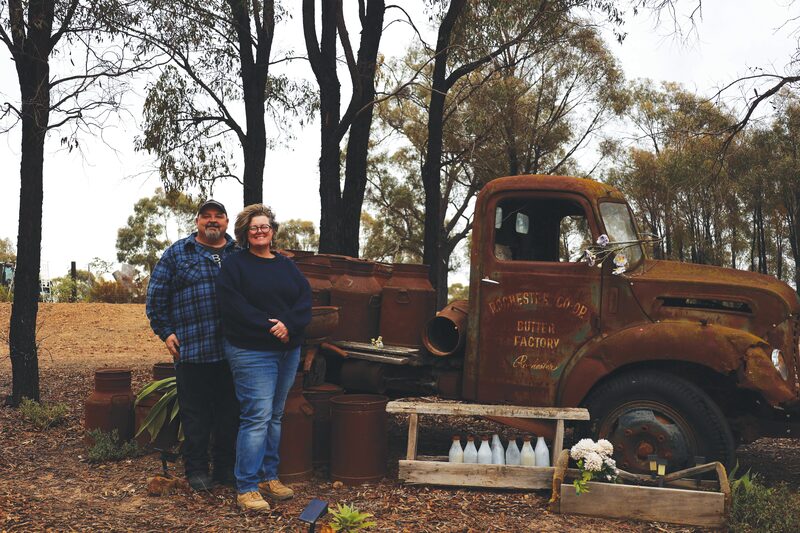
“What drew us to the property was getting back to a basic lifestyle. When we purchased the property as a weekender, we were in the thick of COVID in Melbourne and we felt really trapped and we just decided that we wanted to start a lifestyle that was inexpensive and simple, living off the land, growing what we could use and using water and energy from the sky to eliminate bills and allow us to return to a really simple life,” Kay said.
They saw Whroo not just as an escape from the lockdown, but as a return to foundational values of independence and sustainability. With 50 acres to explore and develop, they embraced the freedom to grow food, raise animals, and live without the burden of utility bills. While the property at this stage is only a weekender, Kay and Steve have begun laying the groundwork for permanent, off-grid living.
The existing infrastructure included two 22,000-litre rainwater tanks, a small solar panel, and a backup generator. Initially, their power needs were modest – gas for cooking, a battery-run car fridge, and generator for occasional electricity. But as their vision expanded, so too did their investment in self-sufficiency.
“We knew connecting mains power would cost more than $140,000, so that was never on the table. We decided to invest in solar instead,” Steve Said.
The couple committed over $60,000 to a robust solar system complete with a backup generator, capable of powering their converted, 24m x 22m besser -brick shed, which will function as their primary residence.
“It was like a giant aircraft hangar, but it gave us flexibility. We could have built a new house, but turning the shed into a home felt like a creative challenge that aligned with our values,” Kay said
The couple have added internal and external insulation to the shed to reduce energy demand and are mindful that even off-grid systems require maintenance.
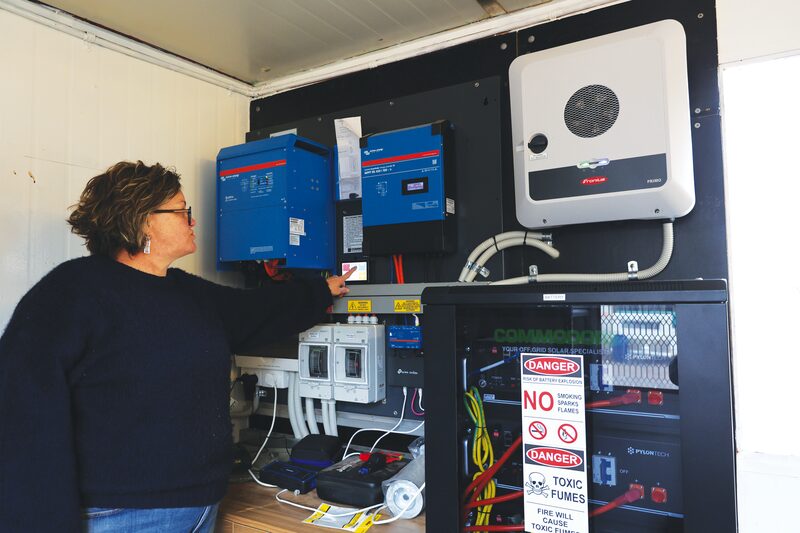
“People think off-grid means free energy forever, but in 10 years we’ll need around $20,000 to upgrade the system,” said Steve.
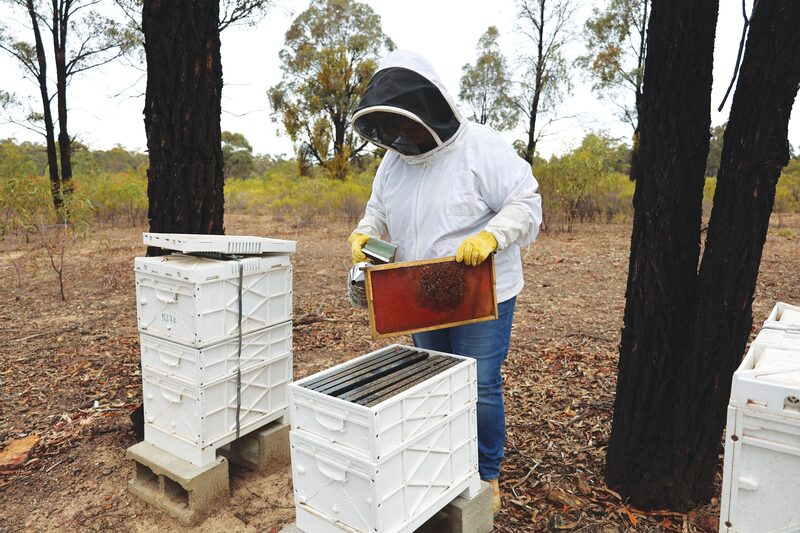
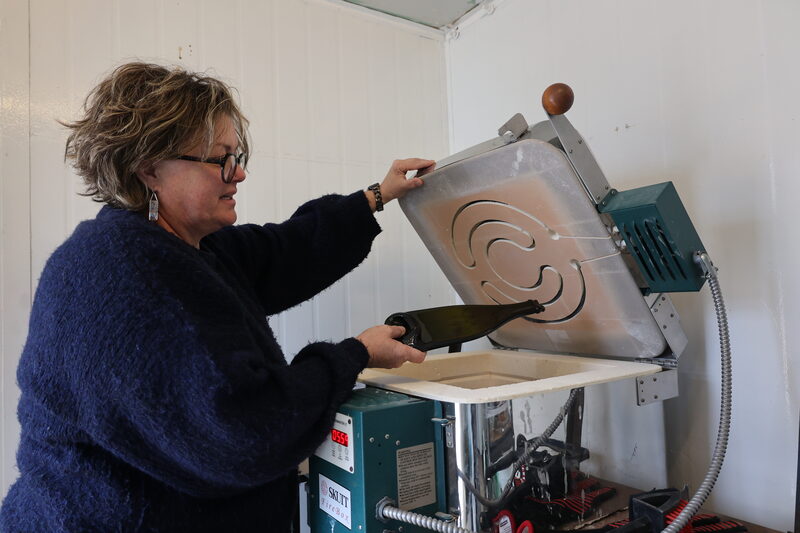
Despite these realities, the couple continues to forge ahead with their dream. Inspired by Kay’s upbringing, where food was grown, animals were slaughtered, and water came from tanks, they are slowly building sustainable micro-enterprises. Plans are underway for a market garden to sell produce locally, and they’re considering olive trees, honey manufacturing and installing a commercial kitchen to prepare produce for sale in nearby towns and markets.
“We’ve always had lots of ideas. It’s about creating something meaningful, something that gives back,” Kay said.
The experience has also shaped their daughters’, Taya and Shanae’s perspectives.
“When we bought the property, the kids were 14 and 15. It gave them the chance to experience this life and decide if it’s for them. Whether they want to live in the city or value where energy and food come from, that’s up to them, but at least they have an opportunity to understand it,” Kay said.
For Kay and Steve, the decision to purchase in Whroo reflects a desire that perhaps lingers in all of us, to live a life that resonates with authentic purpose and allows us to test and trust our own capacity for self-reliance. Rejecting consumer dependency and honouring core desires and familial roots, the couple’s brave and creative undertaking is most importantly grounded in a deep respect for nature and a genuine concern for future generations, who deserve the right to observe and engage with the world in a spirit of respect.
Isn’t it interesting how calamity and lockdown can release such innate and powerful motivations.