

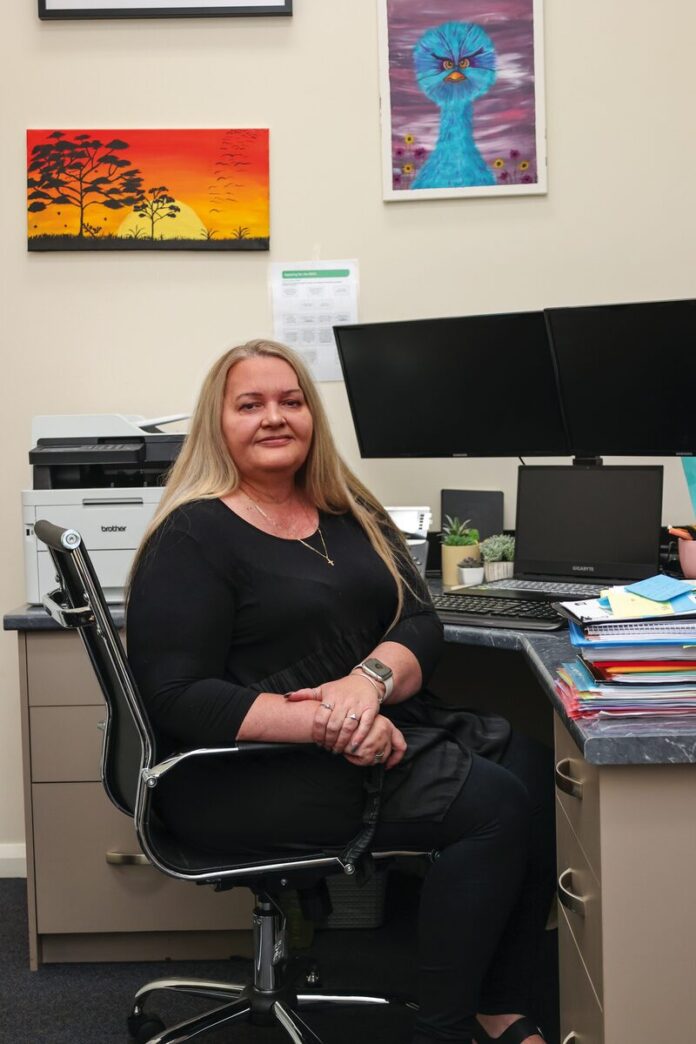
BARELY an adult and living with significant disabilities, Tina Powney’s son, Tyron, was sent to prison without any consideration for his complex needs.
As a private counselor working with children and families with special needs, Tina wrote endless letters to organisations to gain support for her son.
Finding zero support for individuals – disproportionately Aboriginal people, like Tyron – with a disability to transition in and out of prison, Tina took matters into her own hands.
Meeting with other parents, listening to harrowing stories about inmates with complex needs, Tina said, “I just got up one day and said, right, I’m going to quit my job and work with 10 families, that was my dream.”
Two years later, Tina is the sole director of the Gallawah Support Services, an Australia-wide, independent NDIS support coordination service based in the Goulburn Valley.
With 54 staff, including a team of nurses, social workers and support staff, Gallawah operates seven days a week, 24 hours a day and has pioneered critical support services to fill the gap for inmates with disabilities.
“I realised with my son, that I couldn’t fix the system because there’s no system to fix, but I can develop a system to make sure that my child, my loved one or somebody else’s child would never go through this with no support,” Tina said.
Providing a range of coordinated services for both Indigenous and non-Indigenous NDIS recipients including mentorship, art therapy, support work and specialist services, Tina said Gallawah is a provider committed to assisting its clients to live their very best lives through support.
But it is Gallawah’s deep understanding and lived experience of disability justice that is predominant in Tina’s mind and work.
Recently providing evidence at the Disability Royal Commission in Perth, Tina said she felt ‘blessed’ to be able to present cases of inmates with disability with the impetus to effect change.
“We’re empowering change, giving people hope. It’s giving participants that have been long term in custody or long term in child protection a new door to enter, not just a revolving one.”