
By Sarah Knight
FOR THE first time in the state’s history, Victoria’s three main schooling sectors have banded together to co-create a new ten-year strategy designed to significantly improve education and wellbeing outcomes for First Nations learners across the state.
Officially launched in September, the Marrung 2026–2036 First Nations Education Strategy builds on the learning and knowledge acquired over the past decade, since the release of the Marrung Aboriginal Education Plan 2016–2026; Victoria’s 10-year Aboriginal education plan designed to support First Nations learners, families, and communities from early childhood through to TAFE, university, and employment.
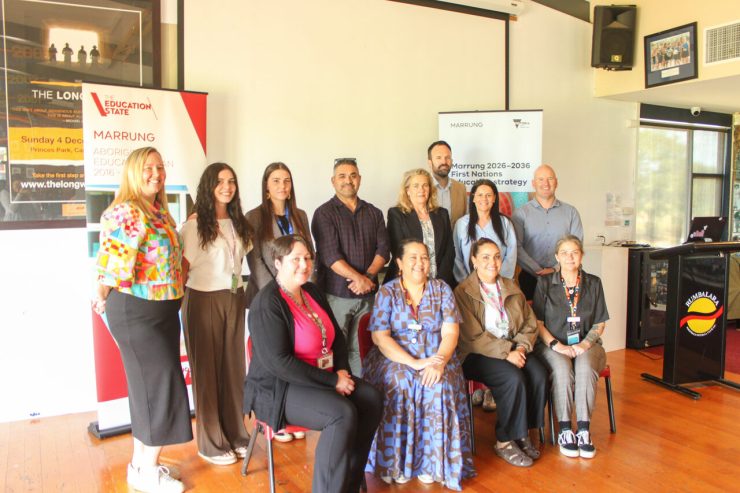
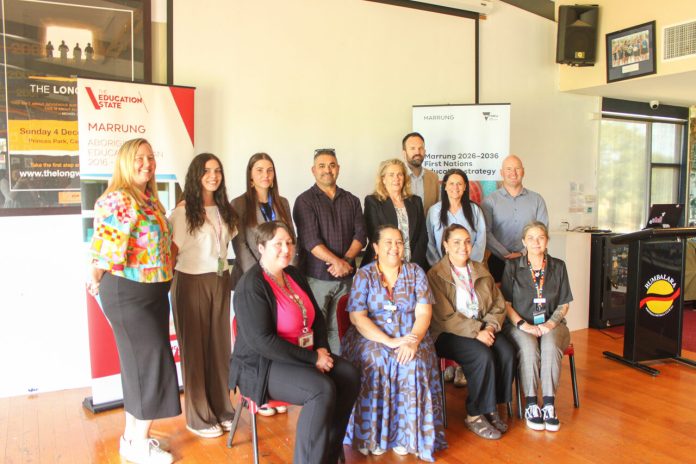
The Strategy was presented throughout regional Victoria last week via a regional roadshow. Rumbalara Football Netball Club hosted the Goulburn Valley presentation last Tuesday, October 27. Organisers and panel members delivered a high-level overview of the strategy to local representatives and educators from government, independent and Catholic schools; explaining how the ambition and priorities of Marrung translate within our local context – across kindergartens, schools, TAFEs and communities.
The new strategy will see the three sectors, Independent Schools Victoria, Government and the Victorian Catholic Education Authority come together with community partners, in a shared commitment to supporting First Nations learners throughout their entire education journey and into employment.
The strategy, which was co-created with Victorian First Nations communities, led by the Victorian Aboriginal Education Association Incorporated, notably places community involvement equally alongside a focus on learning and wellbeing.
Department of Education Koorie Education Manager, Larissa Falla explained, “The previous iteration of Marrung has provided a strong foundation on which to build. Now, the strengthened collaboration across sectors will ensure First Nations learners are supported from early years right through to post-secondary education, regardless of where they choose to learn.
“Having a strong community voice informing all aspects of curriculum, teacher practice, and student support will lead to improved engagement and outcomes,” Larissa stated.
The strategy is guided by the key principals of self-determination, advancing system transformation and cultural safety and responsiveness, integrated across 31 related actions, enabling a solid framework for delivery.
Larissa explained further, “The continuity of support throughout the full journey of education gives the strategy scope to deliver outcomes that extend well beyond the classroom.”
“I am really excited about the next stage of implementation. Local feedback has shown a strong desire for sustained collaboration and collective impact.”
The new ten-year framework is anticipated to offer an exciting new chapter in the Victorian education sector and indeed, the state’s future.