
By Deanne Jeffers
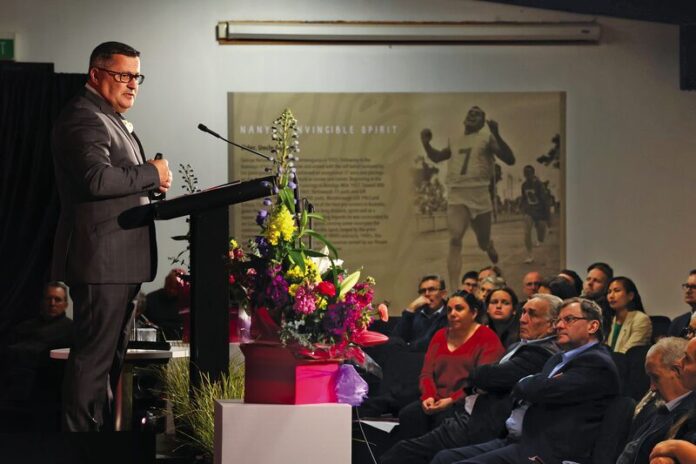
THIS years’ Dungala Kaiela Oration (DKO) was presented by Professor Wiremu Doherty. He spoke about the ability for Indigenous knowledge to lead, build and enhance intergenerational economies.
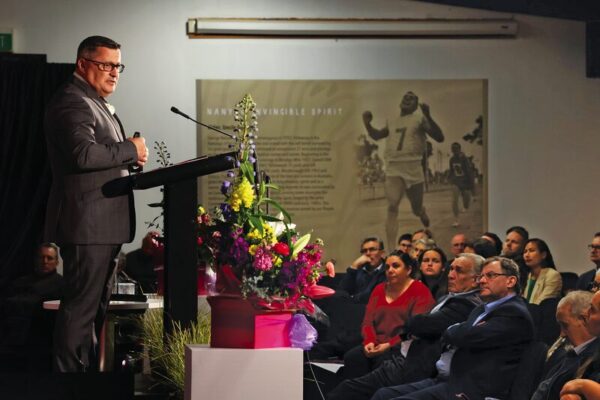
Professor Doherty is an esteemed international educator and chief executive at Te Whare Wananga o Awanuiarangi in Aotearoa/New Zealand.
Paul Briggs OAM from Kaiela Institute (KI) explains Te Whare Wananga is an Indigenous-led educational institute, “committed to principles of Indigenous knowledge embedded in the mainstream curriculum as a means of protecting and securing the future of Indigenous peoples.”
Within New Zealand’s tertiary education context, the Wananga (universities) have been operating for four decades, building on from the early language nests – kohanga reo from the 70s, and the total immersion schooling that followed.
This approach has been very different to how Indigenous peoples and their knowledge are treated and taught within Australia, and it will be the basis that KI approach the Munarra Centre for Regional Excellence and the Munarra Academy.
Having a pathway for students to complete their formal schooling and tertiary provision immersed entirely in Maori for 40 years is having a positive impact on workforce development in New Zealand. No longer is the notion of educational excellence dialectically opposed to Indigenous excellence.
As well as promising to increase regional GRP $150M by 2036, Paul says, “This approach is a change in the narrative from a siloed approach of crisis intervention to an investment approach for a prosperous and productive future.”
The 2022 DKO is available to watch online at the Kaiela Institute’s website at www.kaielainstitute.org.au/dungala-kaiela-oration.html/