
CAUSING severe damage to a wide range of commercial fruits and vegetables, as well as home gardens and unmanaged fruiting plants, Queensland Fruit Fly (Qfly) is a native pest of Queensland. It is responsible for premature fruit rot, fruit drop and significant horticultural losses.
Originating in subtropical coastal Queensland, Qfly has expanded its range and is now established in most of Victoria. To protect the region’s $1.6 billion horticultural industry and local gardens, the Goulburn Murray Valley (GMV) Fruit Fly Area Wide Management (AWM) Program collaborates with the community, industry and government. Program activities include monitoring over 300 Qfly traps across the region, targeting fruit fly ‘hot spots’ and supporting landholders, supporting service clubs volunteers, conducting community, industry and government workshops, schools education and reducing unmanaged fruit fly breeding habitat in the GMV.
Because only limited chemicals are approved for Qfly control, early detection and correct use of traps, baits and exclusion methods are essential to prevent population build–up, plant damage and spread to neighbouring areas.
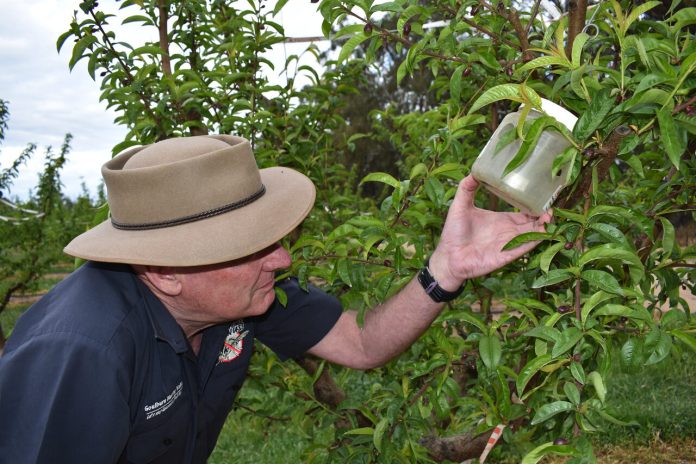
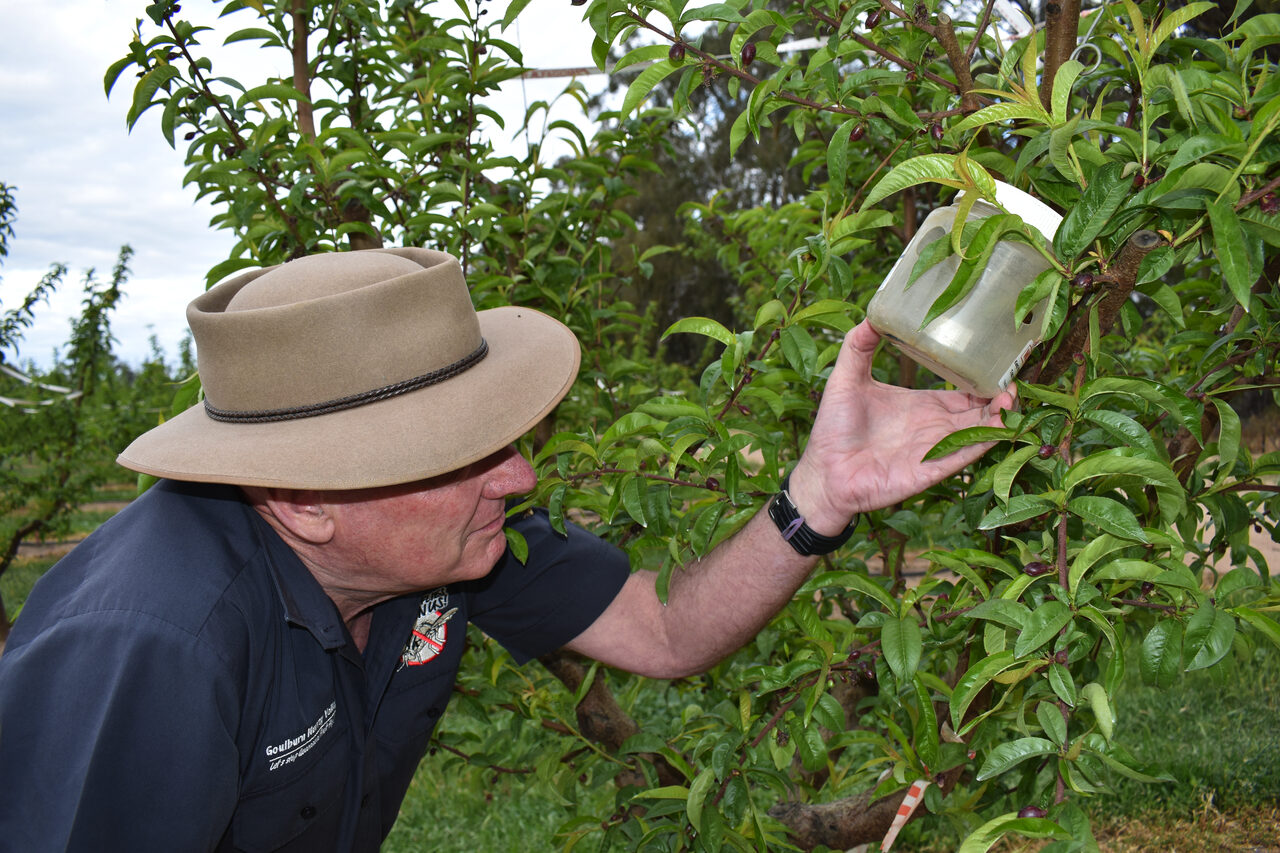
Two effective trap types recommended by the GMV Fruit Fly AWM Program are pheromone traps and food–based traps.
Pheromone traps use the synthetic parapheromone, cuelure combined with an insecticide such as malathion or DDVP. Attracted flies are caught in water or on a sticky surface. These traps help kill pests while also providing early warning of fruit fly activity and are typically used year–round.
Food–based traps attract both male and female flies, especially in warmer months when females need protein for mating and egg–laying. These traps also contain an arrestant being either a pesticide, water or a sticky surface, and are effective within about 20 metres. For control, they are usually placed on a 20–metre grid. See your local hardware, plant nursery or agricultural supply stockists if you wish to purchase Qfly traps.
Pheromone traps require regular recharging, and both trap types should be kept out of direct summer sun. They should also be positioned so that leaves or twigs do not touch the trap, which prevents ants accessing and feeding on captured flies.
To find out more about Qfly traps as well as other Area Wide Management strategies head to the GMV Regional Fruit Fly Program website at: https://fruitflycontrol.com.au/