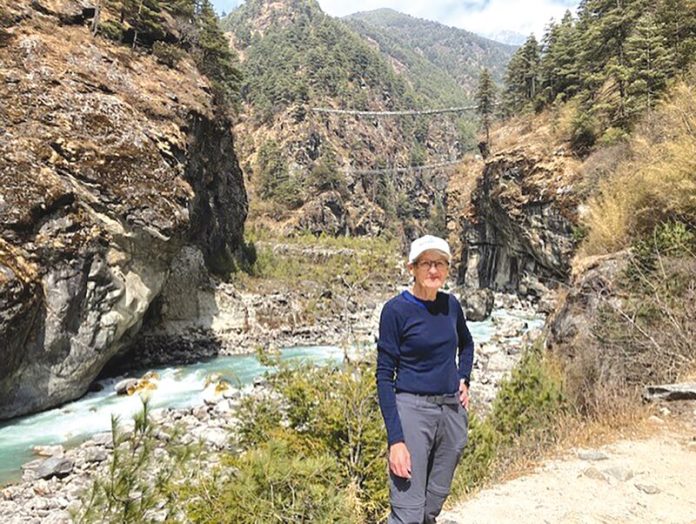
AFTER more than a decade of challenging hikes, starting with Kokoda in 2011, Mary Coad took on her biggest adventure yet – trekking to Everest Base Camp at the age of 72.
“After my daughter Lizzie talked about doing the trek for a year or two, in 2023 we decided that we would go sooner rather than later as I was not getting any younger,” Mary said.
They chose a 16-day tour with local Nepalese company Himalayan Social Journey, which included 12 days on the trail and time in Kathmandu. Mary trained in the lead-up by hiking Mt Major with a backpack, climbing Shepparton’s Telstra Tower, and working with a personal trainer to strengthen her legs and improve her breathing for the trek.
Starting from Lukla, they climbed steadily through mountain villages, cold teahouses, and breathtaking landscapes.
“The teahouses had a central communal area with a potbelly stove… the bedrooms were cold and there were only cold icy water showers,” Mary said.
By Day Five, they had reached 4,400m altitude. “The air was denser,” said Mary. “Walking slow enabled better breathing.”
“We climbed to Lobuche where we stayed two nights… We were now above the snow line and the bedrooms in the teahouse were freezing.”
The next morning it took around three hours to climb to Base Camp. “As is often the case, you could see the end goal, but it felt we were not making much progress,” said Mary.
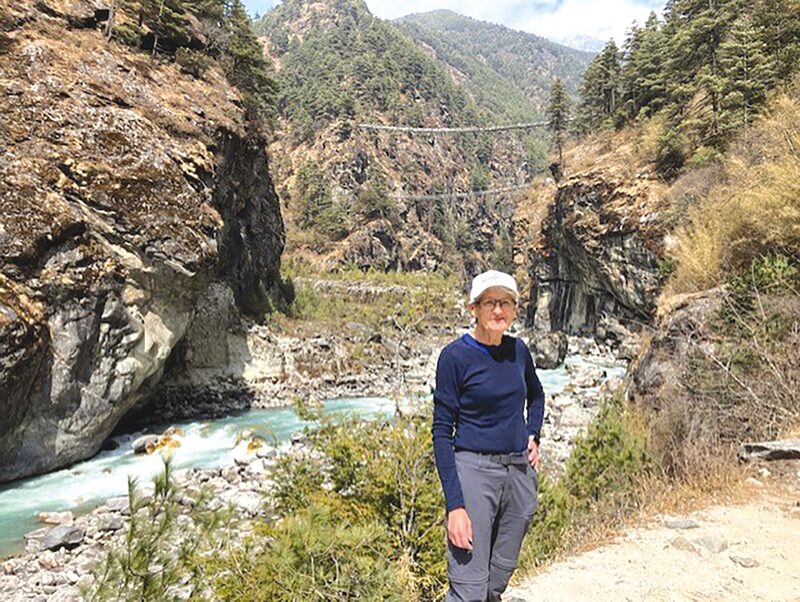
“Finally, we arrived at Base Camp. The aches and pains were ignored as I felt a real sense of achievement and exhilaration,” she said, on reaching 5,364m.
Lizzie climbed to Kalapatha the next morning with three others to see the sunrise over Everest. “It was –20 degrees. I had planned to try to do it, but the chill was still in my body.”
On the way down, Mary noticed how much easier it felt. “I felt I had all the air I needed as we headed down.” Reflecting on the experience, she said, “I would encourage anyone who is moderately fit to consider the trek, providing you put the work in prior to strengthen your muscles and breathing capacity.”
Over the last 14 years, I have taken a significant hike somewhere in the world, starting with Kokoda in 2011. So, after my daughter Lizzie talked about doing the trek to Everest Base Camp (EBC) for a year or two, in 2023 we decided that we would go sooner rather than later as I was not getting any younger. I was about to turn 72.
We researched companies that take groups to EBC and decided on Himalayan Social Journey, a local Nepalese Company which offered a 16-day experience including tours around Kathmandu and celebratory dinner on return. The actual trip to and from EBC was 12 days, with seven days up including two days for altitude acclimatisation and five days to return.
Around October I started to increase my physical training with my personal trainer, as well as going up and down Dookie’s Mt Major with a backpack and up and down the Telstra Tower in Shepparton to strengthen my legs and improve my breathing, working on my diaphragm breathing.
I left Australia on March 5, 2024, meeting Lizzie in Malaysia where we both flew to Katmandu, spending a couple days sightseeing and buying last-minute gear before starting the trek to EBC on March 10.
We met the eight other trekkers and our guide, Santose, the evening before we left. The first day we flew from Katmandu to Lukla, which has an altitude of 2,800m. There is a big demand for seats on the 20-seater planes so, although we were booked for an 8.30am departure, we didn’t depart until after 1pm. When we arrived, we had lunch and then began walking to Phakding, arriving around 6pm at our teahouse. The last 30 minutes were in darkness and phone torches were handy. There was heating in the main dining room, but the bedrooms were cold and there were only cold icy water showers.
The teahouses had a central communal area with a potbelly stove that was lit up about 4.30pm and the fire went out by about 8pm, with the room staying warm for about another hour or so. They had very little fuel for heating, so everyone gravitated to the communal room upon arrival. All the teahouses we visited had amazing menus ranging from breakfast cereals to pizza, soups, hamburgers, omelettes, pasta, rice, vegetarian and traditional Dal Bhat. Prices ranged from $7 to $12.

We left around 8am the next morning to walk to Namche Bazaar, where we spent two nights. Our accommodation actually had hot water, so we took advantage and had a shower. The rest of the day involved a short walk up 400m altitude in the morning to view Mt Everest in the distance and visit the Sherpa Tenzing Norgay Museum (Tenzing was the Sherpa who accompanied Sir Edmund Hilary when he reached the top of Everest in 1953). We also visited a waste recycling information centre where they explained how work is being done to keep the trek clean of rubbish. I was full of energy and walked with the leader of the group. We found a great restaurant in the city and later we both hired extra warm parkers for the next part of our trek.
Day four and we walked to Debouche. The weather was very clear with sunshine but very cold. I had developed a chill so went to the back of the group, taking it a little easier. When we arrived at the teahouse I went to bed early and had a good sleep, with a -10 degrees sleeping bag and very thick doona.
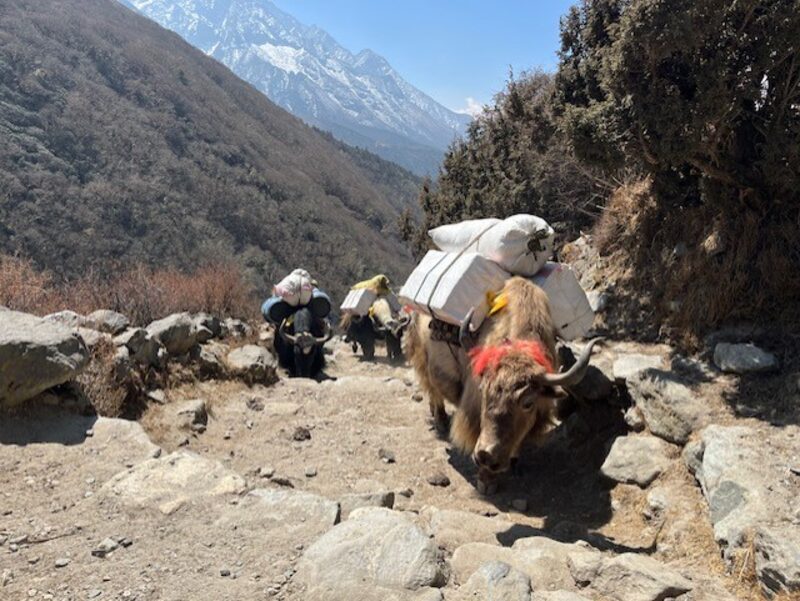
On Day Five it started to get a little challenging as we were now at 4,400m and the air was denser, so walking slower enabled better breathing. We climbed to Lobuche where we stayed two nights, as this was our second altitude acclimatisation. We were now above the snow line and the bedrooms in the teahouse were freezing, so we paid for hot water and shared it between us to get warm. We shared the trek with long lines of yaks, which were being used to transport items required to set up the camp for the 2024 Everest climbing season, which commenced around April. The second day at Lobuche involved walking up 300m in the morning to reduce any altitude sickness. We found a lovely café and watched the documentary Sherpa, which detailed the death of 16 Sherpas in the 2015 avalanche on Everest.
The next morning, we were up early to walk to Gorakshep, where we had lunch and then headed up to EBC, taking around three hours to climb to the Base Camp. This part of the trek had boulders, and you had to be very careful where you put your feet. As is often the case, you could see the end goal, but it felt we were not making much progress. Finally, we arrived at the Base Camp. The aches and pains were ignored as I felt a real sense of achievement and exhilaration. After taking the obligatory photos and taking in the 5,364m altitude, we headed back over the boulders and arrived back at Gorakshep where we celebrated out achievement.
Lizzie got up at 4am the next morning to walk two hours up another 200m to Kalapatha to see the sunrise over Everest. It was -20 degrees. I had planned to try and do it, but the chill was still in my body. There were only three of our group that did the early morning walk, and they were back by 7.15am.
When we went to breakfast there was a gentleman who was on an oxygen bottle, and he was airlifted out by helicopter. Three in our group took a helicopter back to Kathamndu, while the rest of us started the trek down to Pheriche. I felt I had all the air I needed as we headed down. The assistance guide helped me almost run down the 1,000m of altitude. He would hold my wrist if we came to a slippery area where the Yaks had stirred up the dust and sand onto the rocks.
The following day we walked about 20km, but it didn’t feel like a hard walk, as I am sure our lungs had expanded, and breathing was easier. This meant we reduced the return walk to Lukla from four to three days.
On the last walking day, we left before 8am heading for Lukla, stopping at the Tengbuche Monastery. We were honoured to be asked by the monks who invited us to go in the temple. Towards the end of the trek there is a final uphill walk, and at the time it was spitting rain for the first time during our entire trek.
Despite the fact that we were in Lukla a day early, we had to stay the next day because there were no available seats on planes and the weather became a problem, with gentle snow falling around sunset. Because of the lack of heating fuel, it was difficult to find somewhere warm during the day. We were lucky to find a café that had a gas heather and spent quite a bit of time drinking coffee and having nibbles The next day we got on a very early flight to Ramechhap, a domestic airport about 30 minutes flying time from Lukla, and then on a six hour bus trip to Kathmandu. The roads were in very poor condition in many places, although at times we were on beautifully smooth bitumen or concrete. We stopped for breakfast on the way and finally arrived in Kathmandu around 2.00pm.
I stayed another day in Kathmandu and used the opportunity to go to a cooking school to learn how to make some of the local Nepalese dishes. In the meantime, Lizzie headed to Bhutan for a guided tour of the country.
I would encourage anyone who is moderately fit to consider the trek, providing you put the work in prior to starting to strengthen your muscles and breathing capacity. We chose to take altitude sickness tablets from the start as I certainly did not want to miss out on walking to and from EBC.