

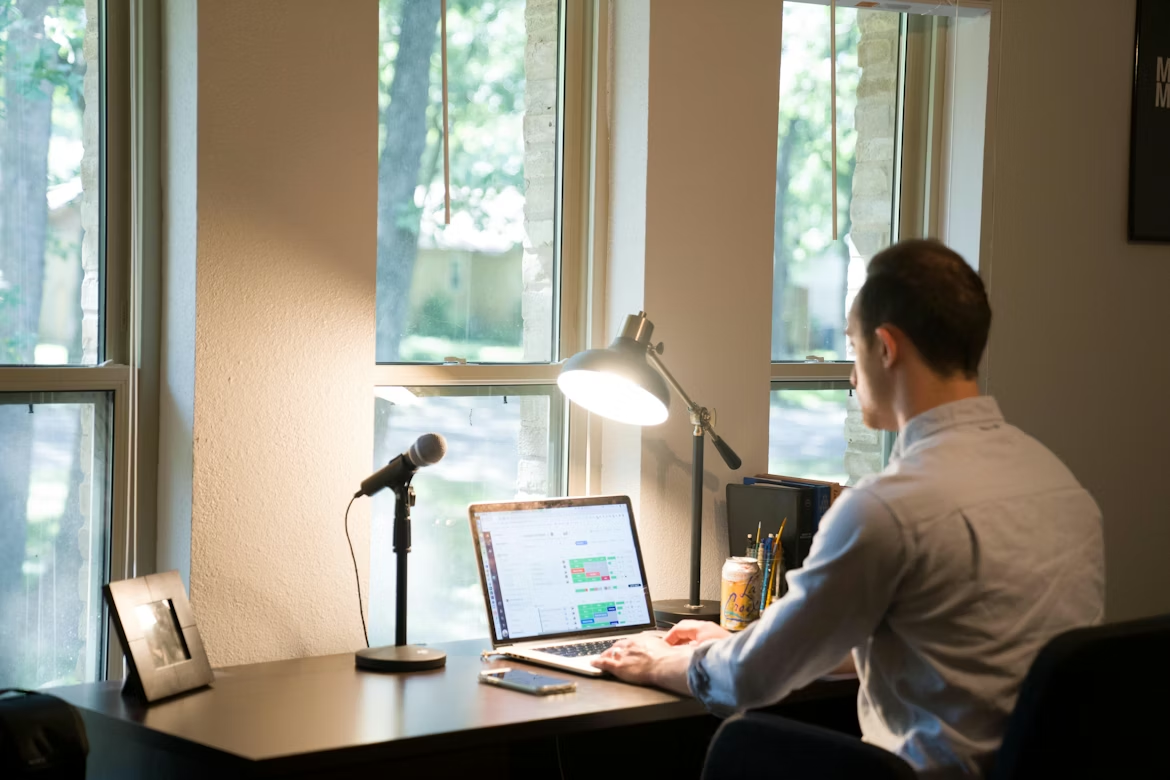
According to the Australian Bureau of Statistics, 36% of employed people worked from home (WFH) regularly in August 2025. While remote work was a necessity for many fields during COVID-19, it has remained a popular choice for employees even after the pandemic.
The Labour Economics journal revealed that remote work postings stayed at a high level even after the pandemic restrictions were lifted. Postings for work-from-home jobs also quadrupled across 20 countries from 2020 to 2023.
With the sudden onset of the pandemic and the shift to remote work, working from home has remained a grey area when it comes to workers’ legal rights. This has caused issues, especially for employees who had to return to the office despite it being possible to complete their work online.
For businesses where staff aren’t in the office as much due to work-from-home arrangements, physical signage and walk-ins matter less. For professional services, a business’s online presence is now its main office. Using services like an SEO agency for accountants is the new way to ensure your business is visible and competitive in a hybrid world.
New work-from-home legislation is being introduced in Victoria that will give employees a legal right to WFH arrangements. This will be part of the Equal Opportunity Act (2010). This is a first for the country, and hopefully, other states will soon follow.
The rise of work-from-home jobs
The COVID-19 pandemic changed daily life on a global scale in all facets of life, from personal to work. In particular, the pandemic brought about dramatic changes in business environments with the rise of work-from-home arrangements due to social distancing policies.
In 2019, only 6.5% of workers in the private business sector worked primarily from home—this number shot up dramatically across all industries in 2020-2021. Despite many businesses’ attempts to bring workers back into the office, the number of remote workers only fell slightly after 2022.
Despite the common belief that working from home impacts productivity, research has shown the opposite. The improved work-life balance can have a positive impact on productivity. There are many benefits to working from home for both the employer and employee.
For example, economist John Quiggin believes that working from home is a massive opportunity for microeconomic reform. He believes that working from home can improve productivity as it cuts out the need for commuting, increasing efficiency.
URL: https://unsplash.com/photos/woman-typing-on-laptop-at-wooden-table-with-breakfast-ghVMdPN33vM
The benefits of working from home
Working from home features many benefits for businesses and employees, from promoting a better work-life balance to reduced resources required for staffing. Other benefits include:
- Savings on office overheads (rent, utilities, supplies)
- Increased productivity
- Better for employee morale
- Reduced commute time and costs
- Greater flexibility and autonomy for employees
Research has also shown that working from home can make employees ‘happier’. Data from nearly 50,000 employees across four continents over 48 months reveal that remote work improves happiness and mental health. This could be due to various factors, such as reduced stress from commuting and a comfier work environment.
What is the new WFH legislation?
The new work-from-home legislation, which will be introduced in July, will introduce WFH rights in Victoria’s Equal Opportunity Act 2010 (EOA). Small businesses will be included in these changes, although workplaces with fewer than 15 employees will have until mid 2027 to ‘get their HR policies and procedures in order’.
Traditionally, work from home has always been negotiated alongside other worker entitlements, but Victoria’s decision to enshrine the new rights in the EOA positions it as a human rights issue.
Victorians working in a small business will have the legal right to work from home two days per week starting 1st of July 2027. People employed by larger companies will have the legal right to work from home two days per week starting September 1st this year.
This work-from-home legislation is a world-first. Alongside ensuring workers are treated fairly, the law will also provide a clear pathway for dispute resolution and enforcement for any employees seeking assistance.
Any work-from-home-related disputes will go to the Victorian Equal Opportunity and Human Rights Commission for conciliation. In the case conciliation fails, the dispute will be heard at the Victorian Civil and Administrative Tribunal.
It’s estimated that this new work-from-home policy will affect up to 1.3 million Victorians employed by small businesses, and many more employed by larger companies. The new policy is expected to save families an average of $5,308 per year on work-related costs.
Pushback against the new legislation
The new work-from-home policy has been approved despite pushback from businesses and business groups since it was announced. The Business Council of Australia chief executive, Bran Black, believes that a ‘one-size-fits-all mandate’ will negatively impact investments and jobs.
The Council of Small Business Organisations Australia CEO, Skye Cappuccio, shares a similar sentiment, believing that the ‘one-size-fits-all’ policy will create uncertainty for small business owners and complicate operations.
Fortunately, the legislation is still going ahead despite the rebuffs. The new work-from-home policies will make it easier for employees to seek a better work-life balance, especially those with families or conditions that make it hard to work in a traditional setting.