By Adrian Conti President of Cobram & District Fruit Growers Association
WHEN people think about food security, they often picture farmers, orchards and paddocks. But protecting Victoria’s food supply starts much closer to home.
It starts in our backyards, our streets, our parks and the communities that help sustain one of Australia’s most productive horticultural regions.
The Goulburn Murray Valley (GMV) is known as Victoria’s fruit bowl. For generations, local families have built businesses, careers and communities around the production of quality fruit. Our region grows nationally significant volumes of apples, pears, stone fruit, cherries and other fresh produce that end up on kitchen tables across Australia.
Protecting that legacy is becoming increasingly challenging.
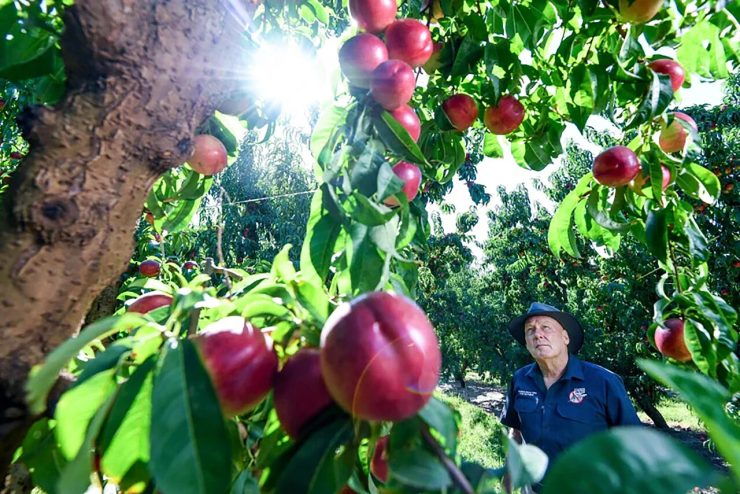
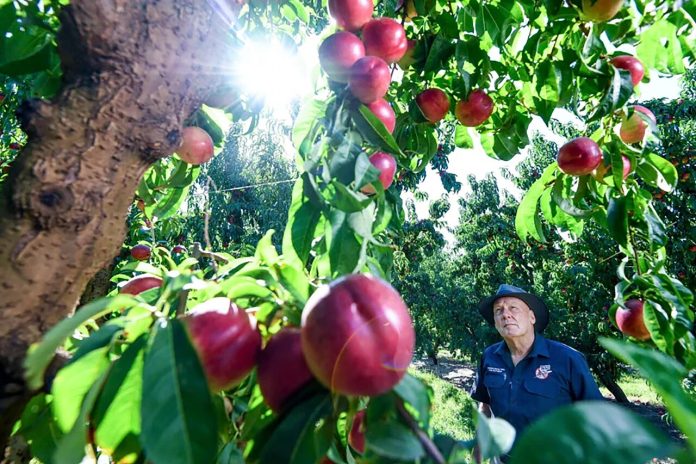
Queensland Fruit Fly (QFly) remains one of the most significant threats facing our region. Recent independent expert analysis identified the GMV as one of Australia’s most vulnerable fruit fly regions, largely because of our unique mix of commercial orchards, residential areas and backyard fruit trees. Unlike many other growing regions, our communities and horticultural production exist side by side.
The success of our fruit fly program has always been built on community involvement.
When the GMV’s high-input Area Wide Management program was fully funded, growers, councils, community groups, volunteers and residents all played a role. Together, those efforts helped reduce fruit fly populations by 95 per cent in the first year and a further 60 per cent in the second year. In Cobram, the integration of Area Wide Management and the Sterile Insect Technique achieved an 83 per cent reduction in fruit fly numbers.
Those results were achieved because an entire community worked together. Residents removed unmanaged fruit trees, volunteers supported awareness campaigns, local governments invested in management activities, and industry provided leadership and resources. Communities recognised that fruit fly was not somebody else’s problem. It was everyone’s problem.
That sense of shared responsibility remains just as important today.
Since reductions in funding, the program has moved from a high-input model to a lower-input approach. Independent analysis has identified increasing QFly populations and a reduced ability to maintain suppression. In 2024 alone, QFly numbers increased by approximately 90 per cent, while modelling suggests populations could increase by more than 600 per cent if effective management is not maintained.
The consequences extend well beyond orchards.
Fruit fly affects backyard fruit trees, home gardens, local jobs, regional businesses and the long-term sustainability of communities that depend on horticulture. It threatens the quality and availability of fresh produce while adding costs throughout the food supply chain.
In many ways, protecting Victoria’s food security begins with protecting the communities that produce its food.
That is why the package being advanced by the GMV Fruit Fly Governance Group is so important.
The proposal seeks investment in restoring high-input Area Wide Management, investigating future Sterile Insect Technique capability, and undertaking an independent economic impact assessment to better understand the true cost of Queensland Fruit Fly to growers, communities, regional jobs and Victoria’s economy. Together, these initiatives would strengthen on-ground management, explore future innovation and provide governments with the evidence needed to support long-term investment decisions.
The evidence shows that success comes when growers, residents, councils and governments work together toward a common goal. We have done it before, and we know it works.
Protecting Victoria’s food security is not simply about supporting growers.
It is about protecting communities, preserving regional jobs, safeguarding our food supply and ensuring future generations can continue to enjoy the benefits of living in one of Australia’s great horticultural regions.
Because when it comes to Queensland Fruit Fly, we all have a role to play.