

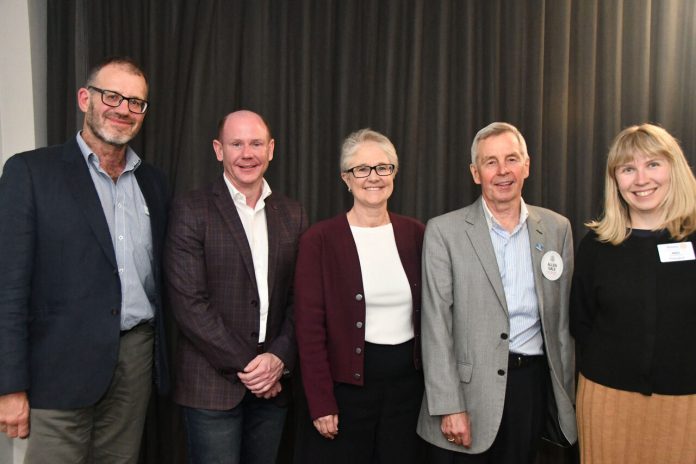
AS one of Rotary’s many community service activities, Rotarians and friends from clubs in Shepparton, Mooroopna, Tatura and Kyabram were briefed last Wednesday at a forum addressing the intersection of climate change and our region’s most vital resource: water.
Three of the region’s water leaders outlined how their organisations are adapting to increased climate invariability to ensure long-term resilience for the environment, agriculture and urban life.
Carl Walter, CEO of Goulburn Broken Catchment Management Authority (GBCMA), Managing Director of Goulburn Murray Water (GMW), Charmaine Quick and Managing Director of Goulburn Valley Water (GVW), Steve Capewell each highlighted how the Goulburn Valley is moving into a period of heightened strategic risk.
Climate projections indicate a trend toward warmer, drier winters, necessitating a fundamental review of infrastructure, operational models, and financial sustainability across all water sectors.
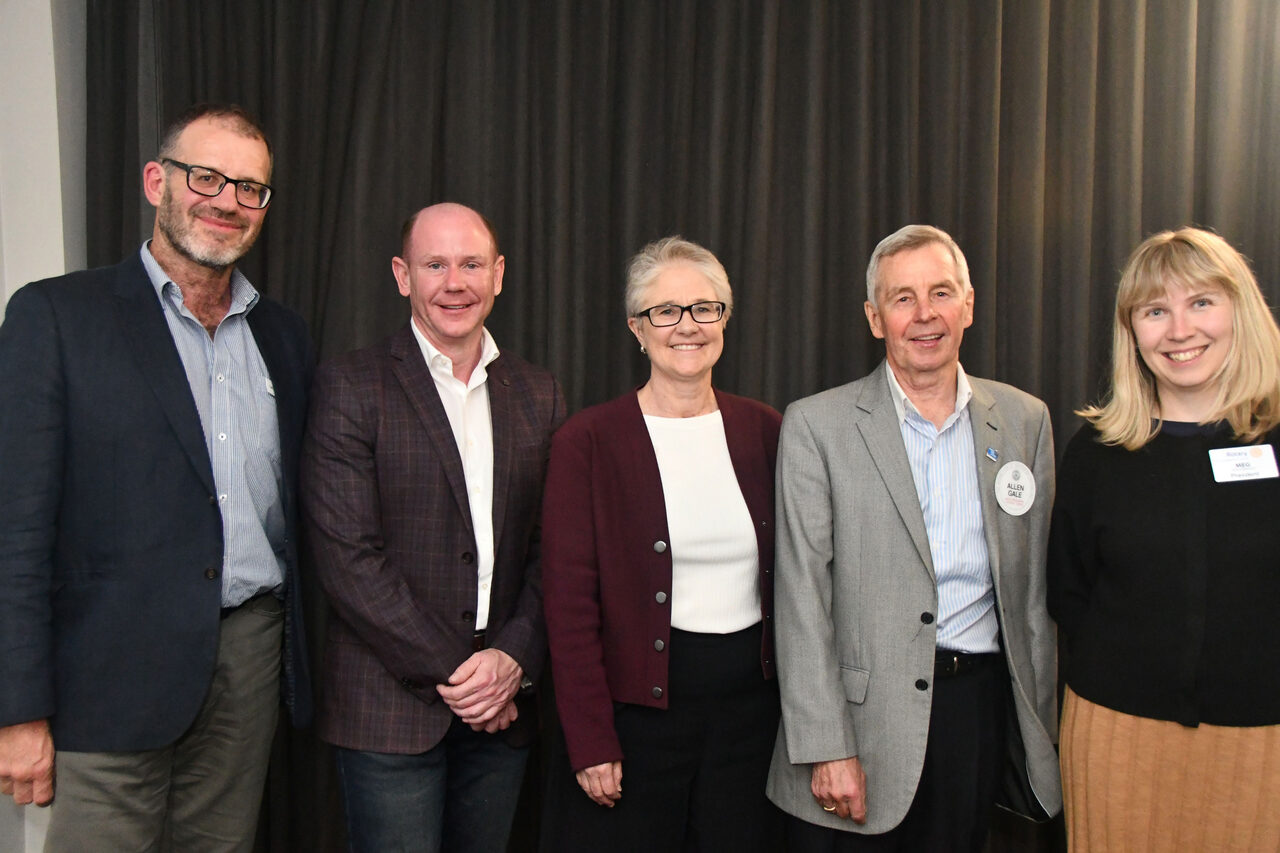
Mr Walters explained that as streamflow becomes more volatile, GBCMA is focussing on catchment resilience, managing river health under reduced inflow scenarios, and the staffing and operational shifts required to protect biodiversity in a changing landscape.
Ms Quick said that with the climate impact on water availability, GMW is navigating the challenges of maintaining a vast infrastructure network while ensuring financial viability and service levels for irrigators. This includes balancing asset rationalisation with the needs of a modernising agriculture sector. She presented graphic plots of how average annual inflows to the Murray and Goulburn systems have reduced by about 40 per cent since the mid-1990s.
Dr Capewell highlighted that GVW’s focus in on residential and industrial water and wastewater needs. GVW is planning for a growing population under a 50-year strategy that targets net-zero emissions. Dr Capewell outlined the investments in infrastructure and technology required to maintain reliable services as traditional water capture becomes more complex. He commented that the destruction of the Longwood water treatment plant in the recent fires demonstrated the need for a new way of thinking about localised plants in high risk areas.
Attendees were also advised that Dr Capewell has been appointed as the incoming Managing Director of GMW with Ms Quick’s retirement in June this year, which had been announced by GMW earlier that day.
The event was organised by the Shepparton Central Rotary Club in conjunction with Shepparton South Rotary Club.