
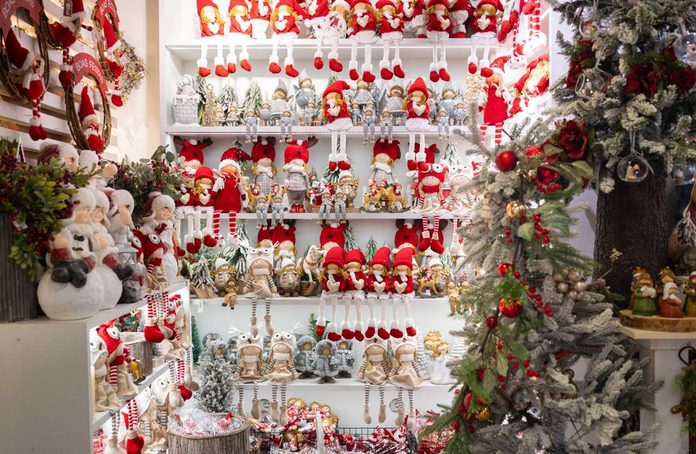
Every year, Christmas seems to arrive in Aussie shops before the weather’s even decided it’s Summer. One minute we’re buying sunscreen, and the next minute there are reindeer, gift boxes and tiny Santa decorations next to almost every checkout.
I used to think retailers were just getting carried away. Surely nobody needed to see Christmas products that early. However, once you consider the ordering, delivery, photography and merchandising involved, it begins to make sense.
For a new retailer, seasonal products can look like an easy opportunity. Customers already have a reason to shop, and Christmas provides a clear theme for the store. But festive demand does not make every festive product a guaranteed success.
The Online Opportunity Behind Seasonal Shopping
Online shopping has made it easier for customers to search for seasonal products at exactly the moment they are ready to buy. It has also given smaller retailers a chance to appear alongside businesses with much larger stores and advertising budgets.
The Australia Post eCommerce Report 2026 found that Australians spent a record $82.6 billion online in 2025, an increase of 14 per cent from the previous year. Around 9.8 million Australian households shopped online, while online purchases accounted for approximately 24 per cent of total retail spending.
Seasonal events can give retailers a timely way to enter this growing market. The report found that 96% of Gen Z shoppers wait for major sales events such as Black Friday and Cyber Monday. This does not mean they are all searching for Christmas-themed products, but it shows how strongly younger shoppers respond to important moments in the retail calendar.
A new retailer can use these occasions to introduce a focused product range, test different price points and reach customers who may not have discovered the business otherwise. The opportunity is real, but simply adding a Christmas category to a website will not make customers appear.
It’s a Test, Not a Lifetime Commitment
Seasonal products give new retailers a practical way to test demand over a defined period. A small range can reveal which designs, prices and categories attract attention.
The useful part is not simply selling out. It is learning what customers picked up and what they walked straight past.
If home fragrance, jewellery, children’s gifts or decorative products perform well during Christmas, they may deserve a place in the store throughout the year. Products that need heavy discounts provide a different lesson.
The first seasonal order should therefore be treated as an experiment. Buying a limited quantity leaves room to respond to real sales instead of relying entirely on predictions.
Not Everything Needs ‘Santa’ Printed on It
Some Christmas products have such a short life because they can only be sold for one occasion. A decoration printed with a specific year might be appealing in December, but it becomes much harder to sell once January arrives.
Australian retailers should also remember that our Christmas happens in summer. Customers may be preparing for barbecues, garden parties, road trips and days at the beach. Home entertaining products, lightweight accessories, outdoor items and practical gifts can feel more relevant than products built around a snowy winter theme.
Traditional decorations still have a place. They just do not need to fill every shelf. Products that remain useful after Christmas give retailers more flexibility if sales are slower than expected.
One Big Catalogue Doesn’t Mean You Need Everything
Looking through a wholesale catalogue can be dangerous for an enthusiastic new retailer. Suddenly, every mug looks charming, every ornament looks collectible, and every gift seems like a potential bestseller.
Working with a supplier that offers several categories can make purchasing simpler. Gibson Gifts is one Christmas wholesaler Australia retailers can consider when exploring seasonal stock across home décor, jewellery, children’s gifts and general giftware.
A large range provides choice, but it does not remove the need for careful selection. Retailers should consider minimum order requirements, delivery timing, stock availability, product quality and likely profit. Most importantly, the products need to make sense for the people who already shop at the store.
A wholesale catalogue gives you options. It is not a challenge to buy one of everything.
Then, Boxing Day Arrives
Before Christmas, full shelves can make a shop look exciting and prepared. After Christmas, those same shelves can represent money that is no longer available for bills, new stock or the next sales occasion.
Australian Government guidance on business cash flow recommends monitoring seasonal patterns and managing inventory carefully. It notes that regular stocktakes and effective inventory management can release money for other parts of a business.
This is the main disadvantage of seasonal products. Their urgency attracts customers, but it also creates a deadline.
Retailers can reduce the risk by starting with conservative quantities and keeping part of the purchasing budget available for reorders. Sales should be checked regularly throughout the season. Products with uses beyond Christmas are also easier to reposition for birthdays, Mother’s Day or general gift shopping.
A Sale Is Not a Magic Fix
For a new Australian retailer, seasonal products can be a smart entry point. They offer existing demand, a clear marketing theme and a useful way to test products within a limited period.
The lessons from Christmas can also be applied to Mother’s Day, Valentine’s Day and Easter. Each occasion gives retailers another chance to refine their products, pricing and merchandising.
The risk comes from confusing a busy shopping season with guaranteed profit. Start with a focused range, monitor what customers actually buy and avoid filling the storeroom with products that lose their appeal on 26 December.
Seasonal stock can open the door for a new retailer. But buying too much of it is a very quick way to block that same door with unsold boxes.