
By Deanne Jeffers
AUSTRALIAN’S have been assured that public health interventions are working and that with increased vaccine uptake, lockdowns could become a thing of the past according to the Peter Doherty Institute.
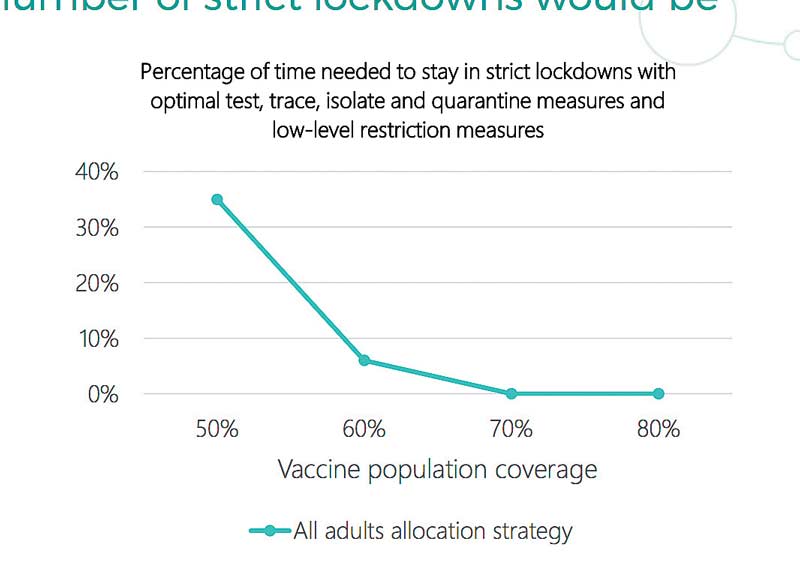
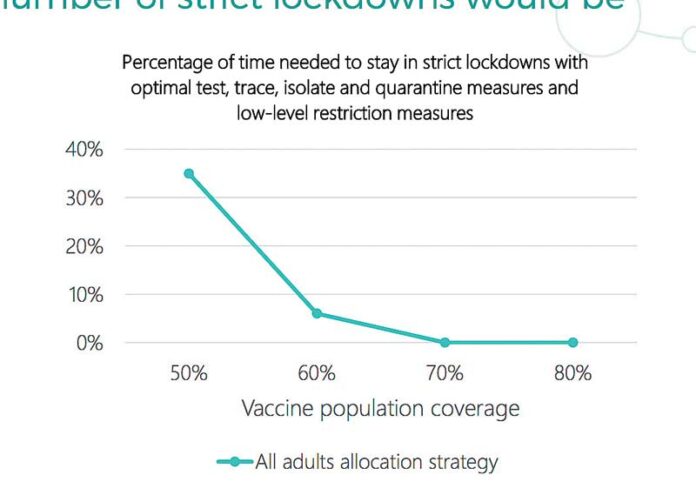
Based on the Institute’s modelling, once 70-80 percent of the population aged 16 and over have been vaccinated, there should be fewer transmissions, hospitalisations and deaths from COVID-19. Only then will international travel be again possible and stay-at-home orders less crucial in our fight against the pandemic.
The modelling uses different scenarios seen over the pandemic to measure the effectiveness of different vaccination strategies and public health and social measures.
As of August 22, more than half of the Shepparton’s population aged 15 and over have received their first vaccine dose; 30 percent have been fully vaccinated.
Eligibility for the Pfizer vaccine has been broadened to include Victorians aged 16-39, a key demographic that should have the greatest effect on reducing community transmission, workplace absenteeism, clinical cases and deaths across the entire population.
The current local outbreak has revealed how an upsurge can exhaust resources, with many supermarkets and other businesses struggling since almost 20,000 of the local working population entered isolation.
Increasing vaccinated numbers will make life with the virus easier to live with, as we live with other viruses such as the flu. While minimal public health measures, like maintaining social distancing, will linger for the foreseeable future, travel restrictions, school closures and strict density regulations should reduce alongside falling case numbers.
Rather than promise false hope, the Peter Doherty Institute has created a strategic plan we can follow to turn the page on what has been a confronting period of adaption. Sickness and death are unavoidable, but with this advice and more vaccines administered, these predicaments can be kept at significantly low levels.