

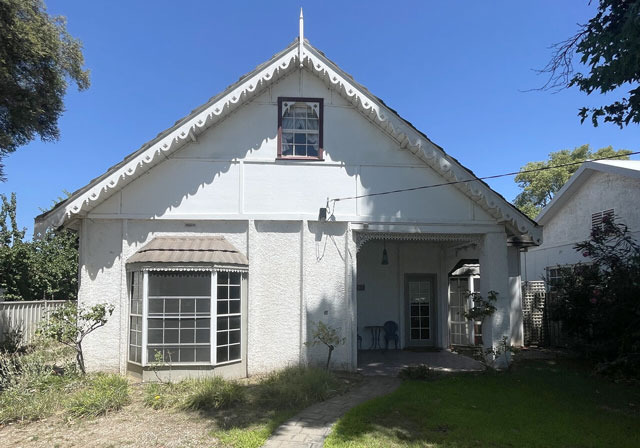
REPRESENTING a rare chapter in Australia’s architectural story, the remarkable yet modest 1920s ‘knitlock’ house at 116 Knight Street in the heart of Shepparton is not only an aesthetically unique and historically significant part of the region’s, if not the country’s, history, but also a tangible link to a distinctive period in Australia’s architectural past.
Built using an innovative interlocking concrete system patented by Walter Burley Griffin, architectural designer of Canberra, in 1917, and further developed and refined for practical application with his wife Marion Mahony, the house was constructed by Shepparton businessman John Sandy in 1923 as a demonstration home. It showcased how efficiently and affordably the interlocking concrete tile system could be used to build homes in regional areas.
With a design ethos centred on ‘democratising the home’ to advance social equity through the ‘owner-builder’ ideal, the system offered a low-cost, mass-produced housing solution to address severe post-World War I material and labour shortages. The modular structure of interlocking precast concrete blocks, secured with steel rods, appealed to Mr Sandy, who sought to prove regional Victorians did not need to wait for expensive, scarce timber and brick shipments from Melbourne. Instead, they could achieve immediate builds and modern, well-designed living spaces, allowing everyday families to construct their own homes without becoming burdened by debt.
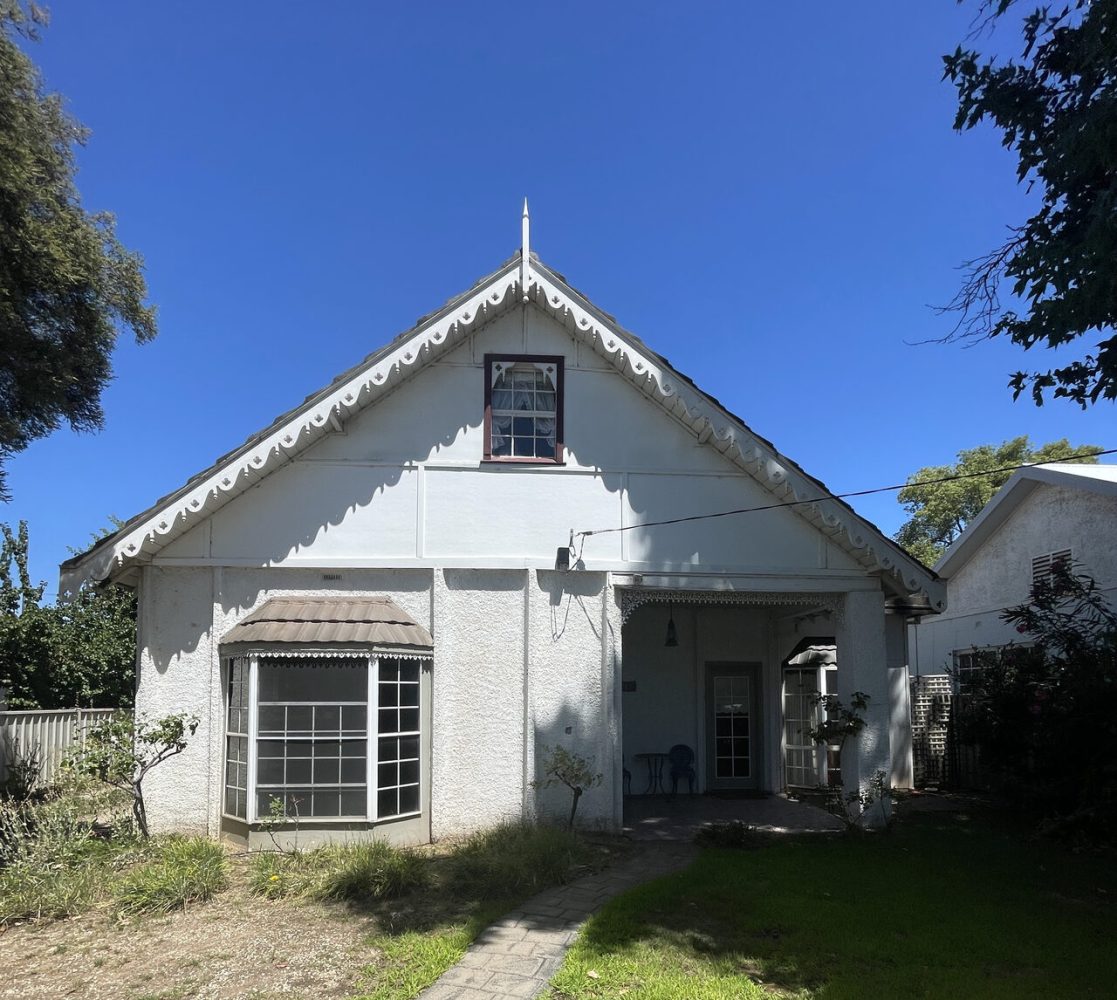
The only knitlock house in Shepparton, the unusual interwar residence, with its segmented concrete walls, prominent roofline, steep gable and large bay window, remains a striking example of innovative design. It reflects a postwar aspiration for accessible home ownership while linking the region to some of the most influential figures in Australia’s design history.
Regrettably, despite its cultural significance and local historical interest, 116 Knight Street missed out on enduring protection under the council’s Heritage Overlay this month when Amendment C242gshe, an attempt to introduce statutory protection, was voted down by councillors.
With the property’s owner objecting partly due to maintenance concerns, and more broadly because the motion covered four properties including some in dilapidated condition, councillors ultimately rejected the amendment to avoid imposing what they deemed unfair financial and maintenance obligations on local landowners.
Now legally open to major structural renovation, subdivision or full demolition at the owner’s discretion, the question must be asked: what do we, as a region, collectively lose when a home such as 116 Knight Street—an invaluable record of the past, capturing a snapshot of both aspiration and historical circumstance—is potentially lost from our neighbourhood forever?