

REDLAND is expanding its fruit growing and packing operations across Australia, with a focus on lifting production, improving efficiency and building new market opportunities.
Speaking at the Mooroopna facility, Redland’s Jordan Bain said a key development for the business is the introduction of Dori gold kiwi fruit, with the first commercial crop produced this year. Redland is the exclusive licensed marketer of the variety in Australia, which until now has been traditionally import-dependent, with no commercial production compared to New Zealand and other major global suppliers.
The move marks a diversification into new fruit categories, alongside its existing citrus, grapes, apple and pear production.
“In the next five or six years, the volume will increase over a greater length of time,” he said.
Alongside new crops, Redland continues to rework and replant apple and pear orchards in the Goulburn Valley that are producing lower yields or inconsistent quality or colour, with a rich colour being particularly favourable in Asian markets.
“We identified blocks with resources that are not performing well. We put a plan in place to redevelop,” Jordan explained.
The business is also looking to expand export opportunities, with China identified as a long-term potential market for its Sassy and Dazzle apples, and Vietnam emerging as a growing opportunity that is yet to have market access for Australian fruit exports. These markets sit alongside existing domestic supply commitments across Redland’s national operations.
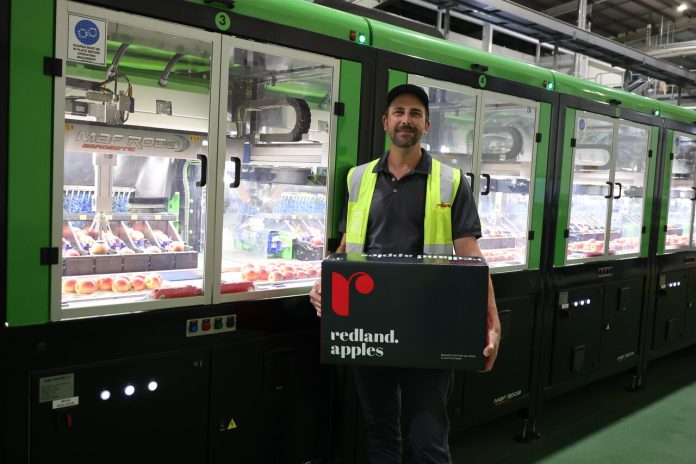
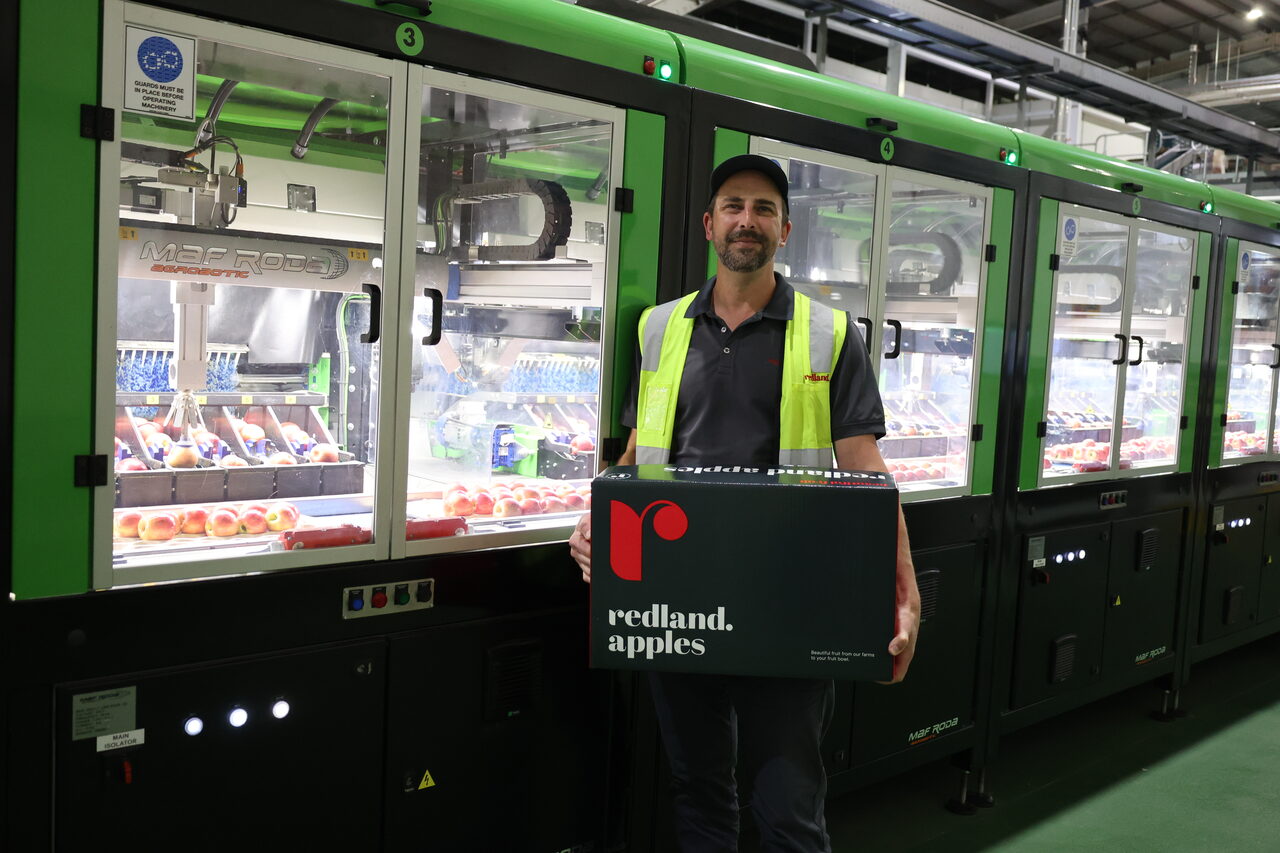
Automation and technology continue to play an increasing role in packing and sorting fruit, with camera systems and robotics used to assess quality and direct fruit through packing lines.
Bain said efficiency gains are increasingly important as production costs rise across the industry, placing pressure on margins for growers.
“Apple and pears are in that space where things are outside of your control. If the market doesn’t hold, then it comes off the bottom line.”
He said despite this, fruit growers have continued to show excellent resilience and determination to improve models for the best results. Largely this is achieved through technology and operational improvements to offset pressures, while acknowledging most available efficiency measures are already being actively pursued across the sector.