INFLATION rising, interest rates and the relentless rise in the cost of living — and the spin goes on and on.
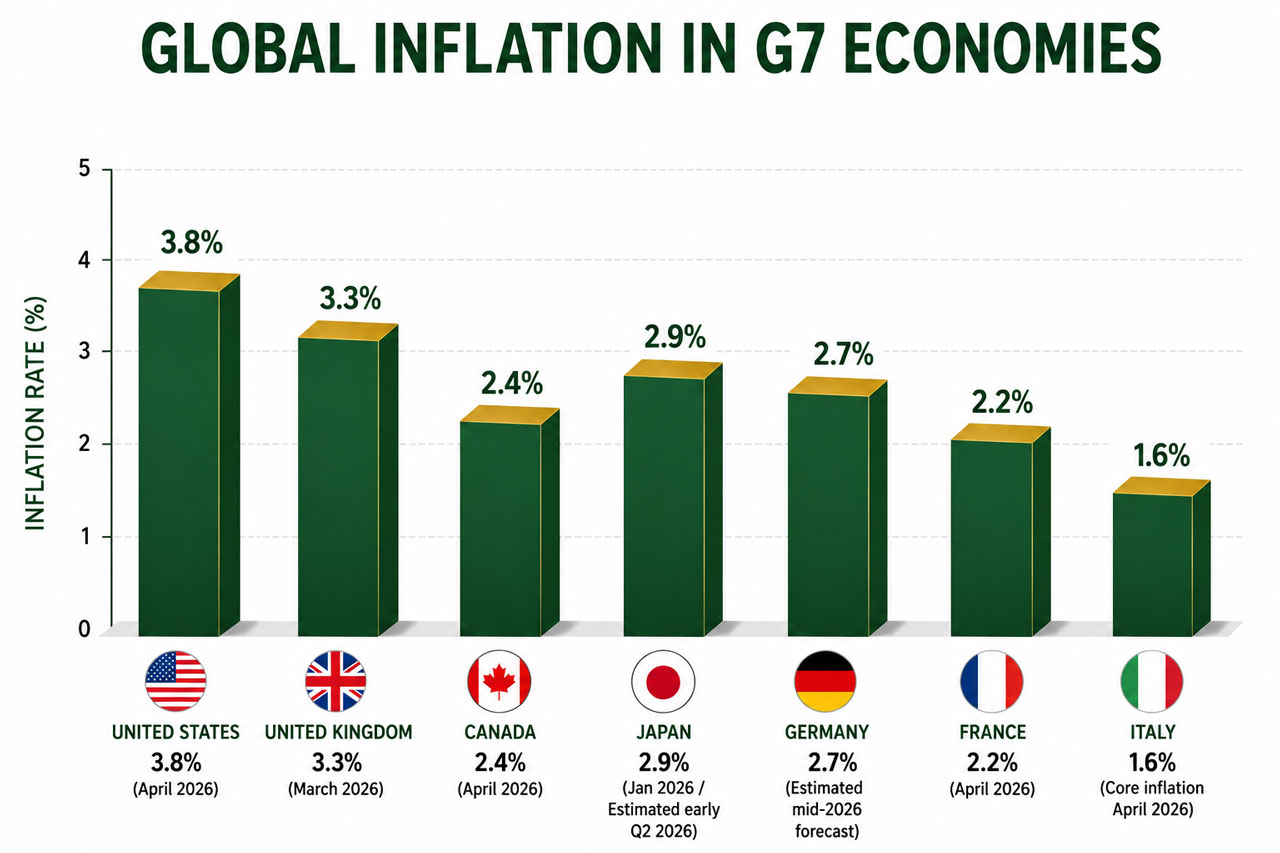
Amid the noise, the numbers and the stress, you may be wondering why our nation appears to be hit harder by higher inflation and interest rates than other economies of a similar size, particularly when Australia is compared with the G7 nations — the United States, United Kingdom, Canada, Japan, Germany, France and Italy — where the contrast becomes clearer.
A combination of factors, including a postpandemic rebound in demand, supply chain disruptions, monetary policy settings and energy price shocks linked to geopolitical conflict, means global inflation continues to affect countries around the world in 2026 and Australia has been no exception.
Interest rates are often described as the “price of money” and are set by the central bank, while inflation refers to the rate at which the prices of goods and services rise over time, which reduces purchasing power and pushes up the cost of living.
Although inflation has eased from the extreme highs seen after the COVID19 pandemic, many nations are still working to return to stable levels, and progress has been uneven across economies.
Countries such as France and Canada are currently recording inflation rates of around 2 to 3 per cent, while Australia’s inflation rate remains higher at about 4.6 per cent, and economists say this gap is driven by a combination of global and domestic pressures.
One major global driver of inflation is rising energy prices, as ongoing conflict in the Middle East has pushed up oil and fuel costs, making transport and production more expensive worldwide, while supply chain disruptions and strong consumer demand have also added to higher prices.
Australia faces additional challenges, including a housing shortage and rising rents, and when these are combined with strong spending across the economy, inflation has proven more persistent here than in many other G7 economies.
Despite the complexity, the unpredictability and levers pulled by the government and central bank to bring inflation down, the fact remains that inflation impacts families and businesses the most through rises in fuel, electricity and housing costs, and all this while experts warn global uncertainty and future energy shocks could keep prices elevated for some time yet.