
By Deanne Jeffers
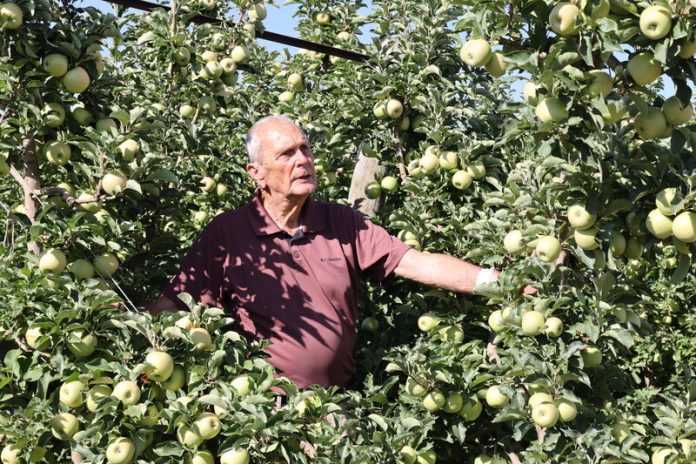
DRIVING around, many of us have seen the distinctive V-shaped trellis supporting rows of fruit trees. While we may not always stop to consider its origins, this revolutionary system–the Tatura Trellis–has transformed modern orchard management worldwide. One of the scientists who developed the system turns 90 years old today, on February 19, celebrating a remarkable life of research, innovation, and dedication to horticulture.
Bas van den Ende’s career in horticulture spans decades of research, development, and hands-on problem-solving. His work on the Tatura Trellis 52 years ago helped maximise fruit production, improve tree health, and make orchard work more efficient. The design has been adopted across Australia and internationally, revolutionising how fruit trees are grown in high-density systems.
“The golden age of my career was when I was working directly with growers, seeing the results of our research in action. We weren’t just writing reports—we were out in the orchards, making real changes, helping growers improve their yields and their livelihoods. That’s when I felt we were making the biggest impact,” Bas said. “In those years, I had more than 2,000 international and national orchardists and fruit industry people visiting a year, and my door was always open.”
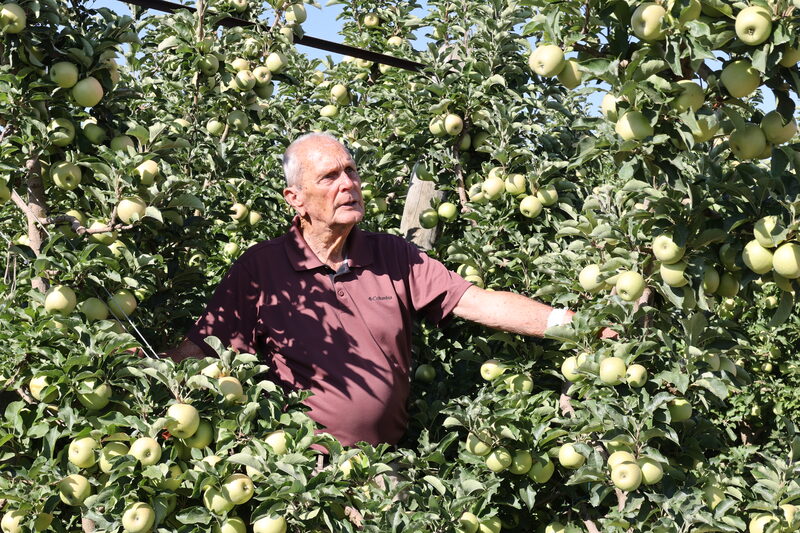
Born in Indonesia and educated in the Netherlands, Bas’ fascination with plants stemmed from a pear tree in his aunt and uncle’s backyard. “I was fascinated by them, I don’t know whether it started then, but after high school I was asked what I wanted to do and I said I wanted to study horticulture.” That exposure led him to study at a specialised college in the Netherlands, setting the foundation for his life’s work.
After migrating to Australia in 1956, 21-year-old Bas was offered a position in Tatura, where his most significant contribution came through his work in orchard design. Bas said, “Australia gave me the opportunity to start a career in horticulture at the Tatura Research Institute. With a short stint in Papua New Guinea, it lasted 33 years. As such, Tatura and the Goulburn Valley became my home and that of my family.”
“After a period of six years, and despite a good job and future in the USA, my wife and I decided to return to the Goulburn Valley and continue working with and for the fruit industry.”
A major objective in developing the Tatura Trellis was early and high yields, ease of management and the mechanisation of summer pruning and harvesting. Not content to stop there, Bas continued refining his methods. He introduced the Open Tatura system and later the branchless-twin-leader system, both of which offered further efficiencies and improvements in crop production. One models that Bas is particularly passionate about is the ‘Mini Tatura’, developed so that the entire orchard could be managed from the ground, mitigating risks with ladders and making the orchard more grower friendly.
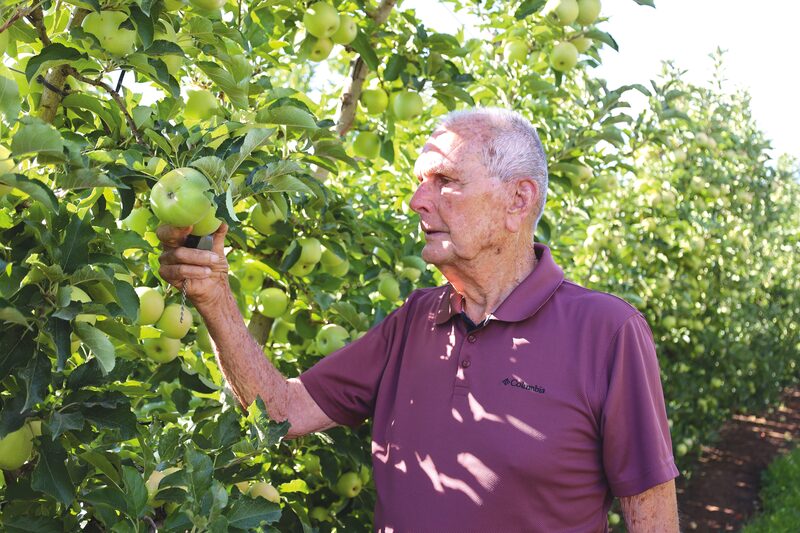
Retirement has not meant sitting on his laurels and smelling the apple blossoms though. As Bas turns 90, his passion for horticulture remains evident and he has remained a sought-after expert. He maintains correspondence with growers around the world and continues to meet and work with local orchardists. He also continues to write, advise and share his knowledge with the world, ensuring that the principals he pioneered will benefit fruit growers for years to come.
Reflecting on his remarkable career, Bas said, “It has been a privilege to have been able to help many fruit growers in the Goulburn Valley and in Australia creating tomorrow’s orchard today and become more efficient and prosperous at growing fruit.”
“The best research doesn’t sit on a shelf—it’s out there in the orchards, being used by growers to make their work easier and more productive.”