

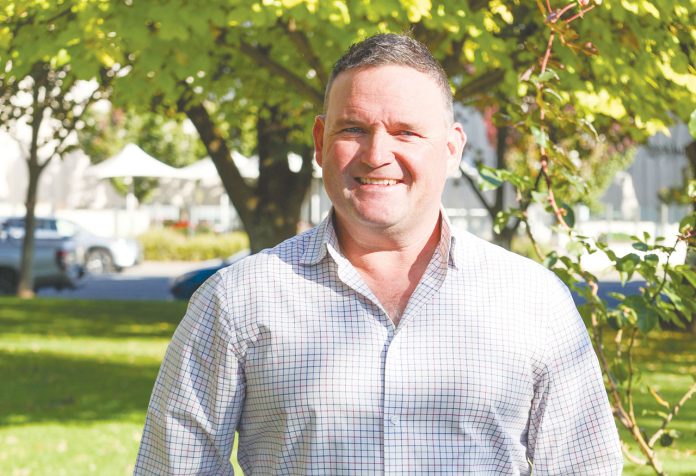
By Chris Crouch, property valuer – Opteon Property Valuers
THE residential property market across the Goulburn Valley has continued its gradual recovery into 2026, following a subdued period through 2023 and 2024. After a post-COVID correction, sentiment has turned more positive, supported by stabilising interest rates (albeit with recent increases), improving consumer confidence, and steady population growth across regional Victoria.
While national housing growth has moderated, regional markets have shown resilience. Recent data indicates regional Victorian home values increased by more than 6 per cent year-on-year to December 2025, with a median value around $650,000. Within the Goulburn Valley, performance has been mixed but generally positive to March 2026. Strong annual price growth has been recorded in Shepparton (+12.4% to a median of $552,000), Mooroopna (+12.4%), Tatura (+6.8%) and Benalla (+6.1%). Other centres such as Kyabram (+3.1%), Echuca (+3.8%), Cobram (+15.6%) and Yarrawonga (+6.4%) have rebounded after softer results in the prior year, while Seymour has remained broadly steady.
The Goulburn–Murray corridor continues to attract both owner-occupiers and investors, drawn by relative affordability and strong rental returns. Rental demand remains robust, with median weekly rents rising between 5 and 10 per cent over the past year. In Shepparton, median house rents are now around $500 per week. Yields across the region typically range between 4.2 and 6 per cent, depending on property type and location. Importantly, vacancy rates remain tight at approximately 1 per cent, well below the Real Estate Institute of Australia benchmark of 3 per cent and below Melbourne’s approximate 1.8 per cent.
This combination of affordability, strong rental demand, and constrained supply has driven increased transaction activity, particularly in entry to mid-level price brackets. Much of this activity is being led by investors—often non-local and supported by buyer’s agents—alongside a smaller cohort of first home buyers and upgrading owner-occupiers. In contrast, the mid-to-upper segments of the market remain relatively subdued, with limited sales volume and modest value growth.
Construction activity continues to be tempered by elevated building costs, although residential land sales have improved over the past 12 months, well above 2024 levels. Developers are cautiously re-entering the market, with several projects anticipated to commence in late 2026.
However, emerging economic headwinds are worth noting. Following signs of easing inflation in late 2025, recent months have seen upward pressure on inflation and interest rates, with the Reserve Bank of Australia signalling ongoing uncertainty partially affected by geopolitical issues. This has begun to temper momentum and may place downward pressure on prices if cost-of-living pressures persist. Momentum may be further tempered pending predicted changes in Government policy in the upcoming May budget targeting reduced tax benefits for investors.
Overall, the market has transitioned from recovery into a more measured expansion phase. While sharp price growth is unlikely, moderate gains are expected to continue, particularly in the entry to mid-tier segments, supported by low vacancy, limited supply, and relative affordability compared to metropolitan markets.