
Shepparton company seeks to solve centuries-old irrigation problem
By Deanne Jeffers
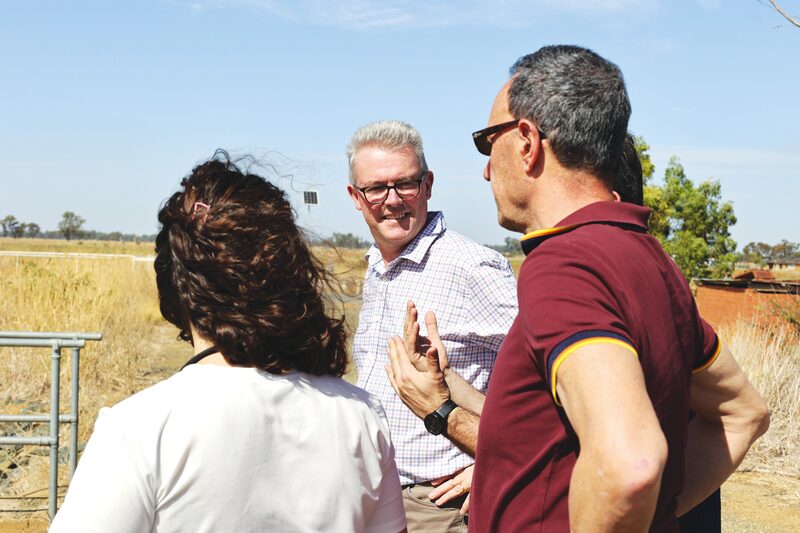
The Goulburn Valley’s expertise in water management continues to attract global attention, highlighted by a recent visit from an Italian delegation investing in the same technology that has transformed the region. Rubicon Water hosted representatives from the Agro Pontino region, who came to gain a deeper understanding of the technology and learn about local advancements in automated irrigation practices—widely recognised as world’s best practice.
The Pontine Plain, a historically marshy Italian coastal region, underwent a dramatic transformation in the 1930s when extensive drainage and irrigation canals converted them into fertile farmland. This ambitious project built upon earlier 16th-century plans by Leonardo da Vinci. However, despite its success, the region continues to face challenges such as water quality, subsidence, salination, and the need for more efficient irrigation management.
The region sits almost below sea level, necessitating the continuous pumping of excess water into channels, some built as early as 91 BC, that direct it to farmers to this day. However, much of this water must ultimately be pumped from the swampy Pontine Marshes into the ocean, leading to significant costs and the loss of valuable irrigation water.
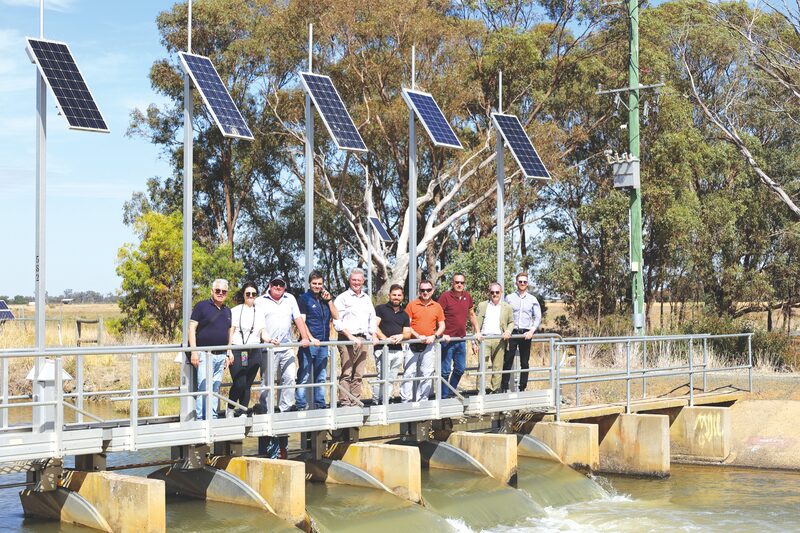
Seeking solutions, the delegation visited Shepparton, home to Rubicon Water, a global leader in automated irrigation systems. Established in 1995, Rubicon specialises in improving water productivity and sustainability and today operates in more than 20 countries. Their existing project in northern Italy has successfully reduced pump costs associated with moving water, and the Pontine Marshes initiative marks their largest European project to date.
Rubicon Water CEO Bruce Rodgerson emphasised the importance of these delegations and sharing the Goulburn-Murray Irrigation District’s advancements in water management.
“This week, we’ve been really proud to have the delegation from our customers in Italy, Angeli Cerese in the north of Italy and Agro Pontino on the Pontine Plains south of Rome. These are our two biggest customers in Italy, and our largest ever contract in Europe is the project we’re about to deliver for Agro Pontino,” he said.
“The delegates have been here this week to witness the manufacturing of our technology in our Shepparton facility and the hydraulic testing of some of the gates that are going to be delivered.
“We’ve also taken the opportunity to introduce both our customers to our Australian customer base, particularly Goulburn-Murray Water, who were able to demonstrate the scale of what we’ve delivered here in Australia. It’s been a very successful trip.”
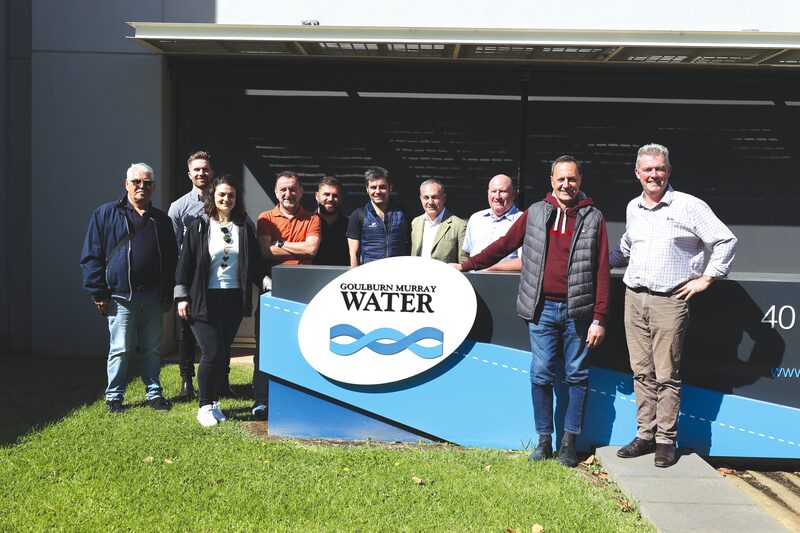
During their visit to Goulburn-Murray Water (GMW), the delegation gained valuable insights into the region’s advanced irrigation infrastructure. They observed firsthand how GMW achieves an impressive 90+ per cent delivery efficiency, throughout its extensive delivery network—an outstanding figure compared to the global average of 40 to 60 per cent. The visit also highlighted the advantages of automated irrigation systems, which contrast sharply with the manual operations that are still widely used in many parts of the world, including Agro Pontino.
At a property in Byrneside, delegates observed Rubicon’s innovative Total Channel Control (TCC) system incorporating a Low Energy Pipeline (LEP) solution at the channel offtake. This type of gravity-fed pipeline, supplied by the open channel distribution network, utilises innovative software, algorithms, and automated service points to ensure consistent, high-flow water delivery, even during peak demand.
Like the Pontine Marshes, but for different reasons, the landscape had long posed irrigation challenges. When demand was low, water supply was sufficient, but as soon as neighbouring farms began irrigating simultaneously, water levels would fluctuate, leading to unreliable water delivery to irrigators.
This inconsistency greatly impacted farmers’ livelihoods and required constant monitoring and adjustments—until the LEP system was integrated. By employing a narrower pipeline, costs are reduced while flow efficiency is increased. A pump at the intake automatically activates to boost capacity when needed during high-demand times.
“Coming to the Shepparton region and seeing these systems in action gives them confidence in adopting new technologies that are transforming water operations globally,” explained Rubicon Water Business Development Manager Peter Moller.
This visit not only fostered international collaboration but also reinforced the importance of adopting modern irrigation technology to tackle global water management challenges. By examining Greater Shepparton’s successful irrigation strategies, the delegation gained valuable insights into practical, high-efficiency solutions that could shape the future of their own region.
Rubicon Water’s very name holds unique significance for this project.
The company shares its name with the Italian Rubicon River, famously crossed by Julius Caesar in 49 BCE, marking a decisive and irreversible moment in history. Today, the Pontine Marshes face a similar turning point—while Popes, poets, Mussolini, and even Leonardo da Vinci couldn’t solve the centuries-old problem, could Rubicon’s innovative technology finally tame the Pontine Marshes?